The Escape [1]
- Original content [3]
- No explicit material
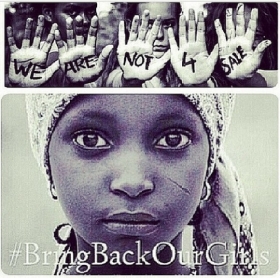 Abeo heard and felt her phone signaling. Not the ringing of a call or vibration of an update, but the signal of alarm. Around her, the other girls in her school pulled out their phones to read the same message. The conversations of the cafeteria grew raucous, as if quiet was really possible in a school at lunch, and teachers began to usher everyone towards the parking lot.
Buses were being started outside, starters cranking antiquated engines to life. While some technologies had made it to their corner of the world, gas and diesel engines remained the norm for at least a bit longer. Electricity was now everywhere with solar panels costing very little for a day's energy, but vehicles with batteries went to regions with more money to pay for them.
Overhead, small flocks of drones buzzed to the sky taking a quick reconnaissance of everything that moved - even in their part of Africa, nearly anything that moved was tracked in some way. Abeo climbed into the front seat and waited while the bus filled with her peers. She pulled up the pages linked from the warning and, reading between the lines of governmental jargon, discovered that suspected terrorists were blitzing their small city.
There was no real way of knowing they were terrorists, but nearly every citizen had an identifier and when a person without an identifier entered areas like the city, they were watched and tracked by drones and cameras. When groups of unidentified individuals were moving at speed, the system assumed they were a threat and initiated protective protocols. It wasn't perfect, as the system was only able to cover living spaces, the main roads, and a few kilometers around these. Over time, the terrorists had discovered blitzes were the best way to take hostages, hitting before the systems could respond. Better than nothing, the warnings gave them ten to fifteen minutes to prepare or flee ahead of an assault. It had saved the school more than once.
The door closed and they started out as the fourth of a line of five buses fleeing north. From her seat, she could see the driver's screen on the dash. Their location appeared as a purple star within the city, outlined in a grey, that faded to the brown and green of the region. A crisscross of orange roads mapped the city and countryside with the roads east and south slowly turning red like blood in arteries.
As the bus started bouncing along the road, the driver pushed the engine as hard as he dared - a breakdown would almost certainly doom them all and he would be the first one shot - and her seat mate, a girl a few years younger than her, cried softly. Abeo put an arm around her, not recalling her name. "It will be okay. You'll see, we'll get away."
The girl leaned into her shoulder, crying softly, and Abeo watched the screen as the driver followed the convoy, the dust of the buses in front of them swirling in through her window. On the screen, the red lines were closing in on the small city and their homes as the bus driver gave it more fuel. The city streets turned red, leaving Abeo to wonder if that was a sign of those who didn't have the wealth to attend her school and had been left to flee into the scrub or hide in their homes until the danger passed.
Then their road on the screen began turning red and the red started overtaking the orange as the militant's military transports were capable of going much faster then their old bus could manage, at least until they reached the new, smooth pavement of the main highway. As she watched the screen with fear, she wondered if the militants had the same screens and were watching them flee.
The bus had become quiet, even the girl she sat with, who was still leaning into her shoulder, had quit crying and just sat there with her eyes shut. They all knew the stories, having heard them for years, of the fate of girls such as themselves at the hands of kidnappers. Abeo considered her phone, of calling her parents, maybe for the last time, but all she could do was watch the screen and how quickly the red line was catching up with theirs.
The kilometers passed, dust swirled, everyone prayed. She watched sweat trickle off the driver's earlobe as the fans did little to cool the fear everyone felt in their stomachs. The red line was almost upon them, but the buses had almost reached the highway and the military base was just south of the junction.
Her hope was growing when the sound of nightmare shook the bus. One of their tires had blown out.
The bus began to drift left, the driver pulling hard to keep it on the road. He had to slow to keep it out of the ditch. The bus behind them went by on the right, Abeo was chilled by the wide eyed looks of the girls passing by. They knew and had heard the same stories and wondered if they were looking at friends and family for the last time.
There was a crunch and the bus skidded to a halt with the left side in the ditch. The driver tried to start it again, turning the key over until it kicked to life. A keening sound had started from someone in the back and others started weeping loudly. Abeo could only watch the map as the red lines caught up with their position and the sound of engines and gunfire came in through the window.
The driver gave up and jumped out of his seat, opening the door and barking at them to get out, to run, and to spread out.
It was then they heard the whine of jet engines and the first volley of bullets fired from the drones. Abeo, already out the door to make a run for the cover of trees and shrubs, was still holding the girl - Oni, her name somehow came to Abeo in the midst of this - to her shoulder. The driver grabbed them by their clothes and pulled them back onto the bus, yelling for everyone to get on the floor.
Abeo held onto the edge of the door, watching as the drones began to assault the militants. The first wave struck the gunners with precision. As men fell off the back of their vehicles, hitting the ground limply, the drones circled back around. Other militants fired on the drones, which widened their turning radius and began to dart back and forth. The drones continued to fire, striking men and vehicles again and again as drivers turned around to race away.
A few survivors, men who were lightly wounded or had simply fallen out of their vehicles during the sharp turns, had pulled together and were running at the bus, yelling for them to wait, and firing a few shots in the air as a warning. Abeo stood frozen, now facing a dozen men who would hold them as captives to ensure their own freedom. The driver grabbed her arm and pulled her back, slamming the door shut and telling everyone to stay down. She watched through the glass of the doors as they advanced, but, once again, a series of drones, these powered by helicopter rotors, swept overhead. A sound like hammers hitting nails filled the air and the men dropped one by one as they fired or fled.
The sound of large vehicles from the other direction announced the arrival of the military. Abeo breathed deeply, happy she had survived the event, but wondering if her cousin would be with them today if the system had been in place a few years earlier.
_________
It's difficult to understand the future as the combination of changes we face may make 50 years from now as different from today as today is from 500 years ago. While technologies drill ever more deeply into our lives, there is a growing concern over privacy. Events like these make me wonder how much privacy is a first world issue and how far down the list it might be for individuals living in places where terrorists can kill or steal your children and are always just a few hours away.
Giving up privacy sounds horrific to most of us and I myself agree with the warnings against giving too much data to Google or the NSA, yet even simple systems can provide protection by warning civilians when potential threats reach a certain radius and providing time to prepare or flee. This has been shown to work in Africa using short wave radios to track terrorist movement. Adding satellites, drones, and personal tracking could also help defeat the scouting of targets - if someone isn't in the network, the network watches them even more closely.
What other options exist? Turning regions into battlefields offer generational issues that continue for many years. Terrorist successes get headlines, drawing more sick individuals to their banner. Would it be better to make every effort so costly that life as a terrorist, once full of power, murder, and rape, becomes a life of steady poverty and fear?
Privacy is a precious thing and becoming more precious as technologies continue to develop. But in too much of our world, maybe privacy is well spent if it keeps terrors at bay. Especially in places where the distance of terrors are measured in hours and kilometers instead of living on distant continents.
Backlinks:
Wikipedia offers a good overview of the kidnapping: http://en.wikipedia.org/wiki/Nigerian_Kidnapped_Schoolgirls [5]
This story is informed by my research and original thoughts on the ongoing issues of technology invasion and privacy: http://www.regardingtomorrow.com/content/can-technology-help-eradicate-evil [6]
The overall quality of the view:
The quality of the writing/design:
How believable?:
How original?:
Sharing:
- May use any [7]
Story tags (elements of how we live):
Location of story:
- On Earth [12]
Years into the future:
 Interested in the social impact of our future advancements, Daryl developed and built Regarding Tomorrow as a platform to share and discuss our collective hopes and fears of the future. Daryl's background is in education, including graduate studies in special needs and a masters in instructional technology [14] from UVA's Curry School of Education [15]. He has worked as a high school teacher and has over 10 years of university experience in the US and Canada.