Communication

Social Physics

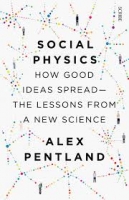
Social Physics book coverAccording to Wikipedia, Alex Pentland's areas of research include social physics, big data, and privacy. In his book, Social Physics, Pentland takes us through the benefits and issues, such as the loss of privacy, that come from comprehensive tracking. It's a short book with a deep look at how the Internet of Things and the quantified self will collect data to change the world around us and better our lives.

Focused on human behavior, the book offers a look at the range of benefits that could result from our hyperconnected world. These include idea flow to spread and advance new ideas, methods for bringing people into problem-solving scenarios to fast prototype solutions, and ways cities can take the density of its members, services, and infrastructure together to improve efficiency while providing the best living experience for the humans who call it home. At its heart, the work focuses on ways we can use data to find better methods for improving how we work together, but it also hints at the promise of an abundant future where mountains of data provide true insight to the best ways we can work together.

While that sounds promising, Pentland doesn't look at the world through rose colored glasses, but acknowledges how this data can and will impact our privacy. So he also proposes simple laws designed to allow the collection of data while protecting citizens from its inappropriate use (at least without our permission).

Social Physics is a course in a book by one of, if not THE expert in this field. Pentland offers a thorough and digestible look at the field and what it offers our future.
Her (2013)

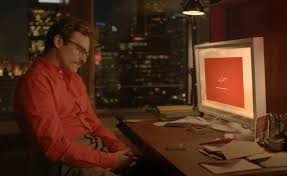
Her - setting up the computerTheodore Twombly is an introvert going through divorce. After he purchases an operating system designed to be a virtual friend, Theodore become emotionally attached to 'Samantha' and enters into a romantic relationship with her. - her being the artificial intelligence in his computer. Her follows their relationship through the typical trials most human relationships go through, with the added issues of a virtual companion who attempts to satisfy their 'lover' through a variety of emotional and romantic experiences.

At its heart, Her is a relationship film set around two very different people, one made of code, attempting to find common ground. It explores the variety of their relationship from Theodore's viewpoint, though Samantha's growth and issues are also represented throughout the story. As the story unfolds and the relationship goes through its ups and downs, we get a sense of this new and fragile pairing.

Nominated for five Academy Awards, Her won best screenplay in addition to being nominated for best picture. With a laid back, futuristic setting and a story presented through conversation and emotion, Her isn't just science fiction, it's a brilliant look at a future where artificial intelligence, and also artificial emotion, impacts the individual.

Minority Report (2002)

Film posterBased on "The Minority Report," a short story by Philip K. Dick, this film explores the issue of preventing crime before it occurs. The PreCrime division, a special unit set in Washington, D.C., uses three individuals who possess the ability to foresee murders before they occur. When each case is identified, including the victim, the perpetrator, and the time, the PreCrime police use recorded visuals from the "precog's" visions to identify the location and foil the crime before it happens.

While the division has had great success and is considered perfect, the film focuses on what happens if these visions are not 100% reliable. Especially when the perpetrators are arrested and imprisoned when they were not allowed to actually commit the crime.

Gravity (2013 film)

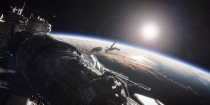
Gravity scene grabGravity is a highly detailed action thriller set in Earth's orbit. Starting with a what should be a routine Hubble Space Telescope repair, the mission ends as events threaten the shuttle and astronauts. The movie spins the lead characters, of which there are two, through a series of attempts to survive in orbit while seeking a way back to Earth.

Afterparty

Afterparty book coverSet in the near future, Afterparty explores a world where psychoactive drugs are printable. All you need is a chemjet printer and an Internet connection to begin printing designer drugs on paper, which is torn up and digested for each hit. The story follows Lyda Rose, one of the five founders of Little Sprout, a group trying to find a cure for schizophrenia, a condition from which Lyda's mother suffered.

The group is successful and Numinous is ready for trials when an event changes their lives. In high enough doses, Numinous permanently alters the user's perception by imprinting a bond with whatever god they believe in, often paired with hallucinations of a holy figure to watch over or even run their lives. Lyda believed the recipe was off the market, but then someone shows up in her ward who is clearly under its effect.

Angered by this, Lyda leaves care early with plans to find the source. With help from a few friends, not all of them real, she goes on a thrilling adventure across Canada and the United States in search of answers.

Using the past to forecast the future

Flying carPredicting the future goes hand-in-hand with preparing for the future, a skill humans have developed to survive tough times and to make their world a better place (mostly, but not always). While we live at a point where futurism is growing more mainstream, even if the term and field are not household names, futurists have made predictions for some time. Ed Fries, formerly of Microsoft, has shared his collection of century old, French futurist postcards in which artists forecast life in 2012.

The postcards depict a variety of scenes, including the one above where a family takes a trip to the moon. Others include a Skype-like system of communication, flying cars, and aquanauts riding seahorses. You can see them at Wired, in an article by Greg Miller.

The Martian

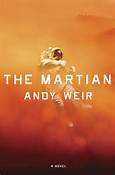
The Martian book coverA Martian storm forces Mark Watney's crew to end their mission just a few days into their 31 days on Mars. Separated from his crew, Watney is left behind to find ways to survive with slim hope of a rescue. An engaging novel from page one, The Martian provides detailed engineering and scientific realities as Watney, a botanist and engineer, overcomes a range of issues in his quest to survive as the lone occupant of the planet.

I'll make no bones about it, The Martian is the best novel I've read in years. Weir picks up right at the beginning of Watney's realization his crew has abandoned him, and keeps you on the edge of your seat. In addition to Watney's perspective, he includes the workings and politics of NASA, and presents a world where all of Earth is rooting for one of our own stranded alone. Weaving it all together offers the reader a roller coaster full of science and engineering that will teach as much as it entertains.

The Escape

Bring Back Our GirlsAbeo heard and felt her phone signaling. Not the ringing of a call or vibration of an update, but the signal of alarm. Around her, the other girls in her school pulled out their phones to read the same message. The conversations of the cafeteria grew raucous, as if quiet was really possible in a school at lunch, and teachers began to usher everyone towards the parking lot.

Buses were being started outside, starters cranking antiquated engines to life. While some technologies had made it to their corner of the world, gas and diesel engines remained the norm for at least a bit longer. Electricity was now everywhere with solar panels costing very little for a day's energy, but vehicles with batteries went to regions with more money to pay for them.

Overhead, small flocks of drones buzzed to the sky taking a quick reconnaissance of everything that moved - even in their part of Africa, nearly anything that moved was tracked in some way. Abeo climbed into the front seat and waited while the bus filled with her peers. She pulled up the pages linked from the warning and, reading between the lines of governmental jargon, discovered that suspected terrorists were blitzing their small city.

Can technology help dementia sufferers maintain independence?

Elderly woman with hands over faceWhile medicine looks for both the cause and cure of dementia, millions of elderly around the world begin feeling the symptoms every year. New technologies, some existing now and some maturing towards consumer products, offer not only real-time information, they also include ways to inject this information into human interaction with their surroundings. Visual overlays in Google Glass, context aware assistive services such as Google Now, and our ever-present GPS location awareness can combine to provide supportive interactions with our world.

While these advancements are being developed for mass consumer adoption, they can also provide support for individuals who live with limitations such as dementia. I've been working on some ideas on how our elderly might use these devices, struggling to get traction beyond what is easily described and would be used by individuals, whether healthy or dealing with dementia. Then I recently heard about VocalID, a group collecting a range of human voices for the use of those without a voice of their own. In the past, individuals unable to speak were limited to a very small set of digital voices - most of them identical to the voice used by Stephen Hawking. To provide semi-unique voices, Dr Rupal Patel founded the Communication Analysis and Design Laboratory (CadLab) and the VocalID organization - the latter which collects 2-3 hours of donor voices to provide options for individuals suffering from severe speech impairment.

Pages