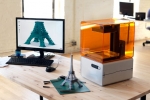
If you pay any attention to the tech world, you realize 3D printing, also called additive manufacturing, is the next big thing as dozens of startups are racing to get their product to market ahead of the competition. Everything from toys to guns, shoes to pizza - there are printers being developed to print anything we buy.
Last year, Carl Benedikt Frey and Michael Osborne published their paper, "The Future of Unemployment: How Susceptible are Jobs to Computerisation?" In their research, they identified that nearly half of US jobs will be automated within the next 10-20 years. Since then, there is a rising sense of urgency represented by the range of articles presenting the medium to long-term career forecasting of either a world of high unemployment or a world in which robotic productivity creates a socialist scenario where all humans maintain a minimal life quality without concern over unemployment. Digging more deeply into viewpoints with more diverse data and historical comparisons show a lot more reasons to be either bullish or bearish on the future.
From ultra-modern Manhattan penthouses to cell phones and radios in sub-Saharan homes, from private jets zipping over the oceans to motor scooters in southeast Asia - we require energy to power our lives. At this point, only protected Amazon tribes and the few humans who have chosen to live off the energy grid do not use any of the world's energy supplies.
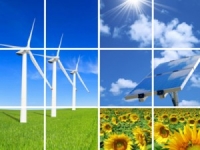
Overall, we humans use in excess of 500 exajoules of energy per year. The energy we produce is derived by a variety of sources such as nuclear; fossil fuels, including coal, crude, and gas; and renewables such as wind, hydro, and solar. These fuels are broken into two main types of use, the first is locomotion via fuel burning engines and the second is the creation of electricity, which is then used as a source of power for motors, lights, appliances, and the gadgets we use (to name a few).
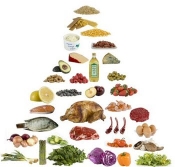
Food is one of our most basic needs, yet it represents culture, history, and individuality through our choices. Furthering our individuality, each person has medical and gastronomical limitations that add another layer of complexity to how we select what we eat. As such, it is a multilayered issue when you look at the future of food and how we might raise and prepare our food, with perhaps consumption being the only practice set in stone (unless they find a way for us to inhale our food, which doesn't sound very interesting to me).
In this futurepath, we'll look at the history of the human diet, current research on eating practices, and current food issues in order to identify how our food culture might change in the future.