Energy management (energy creation)

Where will technology and big data take our future?

Stratasys 3d printed shoes

Technology is slowly infiltrating every area of our human existence. I read Alistair Croll's Race Alongside the Machine today on re/code and it led me to a reflection on how we humans are being changed by the technology we develop and where this might lead in the future.

When I came up with the original idea for a future-focused site, I immediately created a short list I called "aspects of human existence." I've changed them to "elements of how we live" and use them as story tags, a taxonomy vocabulary in Drupal terms, in order to help users find content. After reading Croll's piece, I decided today's exercise would be to look at the (now much longer) list and see what I can come up with for where current trends and predictions will take us as we continue to combine humans, technology and big data.

Extremis - Iron Man becomes posthuman

ExtremisWarren Ellis introduced the Extremis concept to Iron man in a 6-issue story arc starting in January 2005. This arc changed Tony Stark from a cyborg to a posthuman by introducing nanotechnology into his body and altering his physiology to include direct connections with the Iron Man suit. Ellis introduced many concepts and characters that were used in the Iron Man movie trilogy, especially Iron Man 3.

If you're into superhero comics, this is a short arc you don't want to miss. It's available on Marvel Unlimited or through Amazon. In typical comic-book style, it takes some complex scientific breakthroughs and turn them into a magical elixir, yet it brings many of the reasons we research posthuman adaptation into perspective given Stark's need to deal with the story villains. And there are a few great conversations in which characters wax philosophical about their Frankensteinian need to create a future that might be more monster than they would like.

Nanoribbon electricity generation from human organs

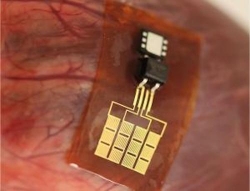
Nanoribbon on human organResearchers at the University of Illinois-Champaign have created a new flexible technology, a nanoribbon, that attaches to human organs and is capable of generating electricity as the organ moves. The current technology is focused on providing power for pacemakers so long term use of these devices could require less surgeries and also be less intrusive in the body.

The other half of the breakthrough is the ability to generate up to 8 volts of electricity from a single device embedded in the body, enough energy to power low-energy devices as long as the nanoribbon (and body) continue to function. Looking long-term, this makes it possible to go past the wearables marked into embedded sensors, monitors and even controllers (OH MY!).

Ideas for dealing with rising ocean levels

Floating school plan for NigeriaUsually, lists of interesting pictures do little more than stoke the imagination. That's great, but it's so much better when you can see some interesting ideas that could actually solve real issues. An article on Discovery.com provides a dozen ideas for dealing with rising ocean levels and also creating energy (I assume because land-based energy sources will use too much important above-water property).


How economic warfare drives ecological destruction

Shanghai smogToo many future visionaries depict a future full of clean energy and cleaner air. It's as if our need for clean air makes us willing to ignore the development and natural resource costs associated with powering all of these high-energy devices we keep adding to our lives. I'm beginning to believe most of us have certain fears which keep us from crossing a line where everything crashes into a horrific vision where every breath has a painful consequence.

Whirlpool reinvents the kitchen of the future, all over again

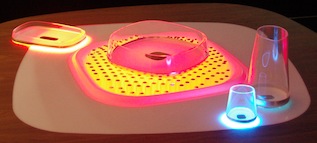
Shot of futuristic table top

Whirlpool shows off a futuristic kitchen design including a reworked cook top, responsive countertops with heating and cooling, and a new approach to refrigeration.  Honestly, it seem they've been reinventing the kitchen for so long, I'm amazed da Vinci didn't present a "Kitchen of the 17th century" when the calendar ticked to 1500.  They're always so colorful and fluid and look like they got blown into space from the Enterprise, but somehow my 2012 kitchen is still using gas fed flame and filled with stone that was ancient when da Vinci's mother was hoping for someone to invent disposable diapers.  That said, I can dream as well...

Pages