Recreation (play)

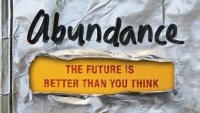
Abundance: The Future Is Better Than You Think

Book coverIn Abundance, Peter Diamandis and Steven Kotler present trends taking us towards a better future - one in which individual needs are met on a global scale. Using Maslow's Hierarchy of Needs as a foundation, they explore technology will find ways to improve efficiency by fostering cooperation, providing access to clean water, producing enough food for a planet of nine billion, and even enabling equality as limitations dissipate.

Many projections offer a future half empty. Here, we get a lesson on how our biases enable close tracking of negative trends, whether serious, global issues or personal issues threatening a comfortable ideal we would not wish to give up. Yet, data show the world is improving. As an example, Bill Gates' annual letter from this past January presents how effective support of poor economies is stabilizing population, improving health, and helping develop economies capable of supporting human rights and freedom.

The point of Abundance is that we can both thrive as a race, free of draconian measures to tame our needs, and solve our problems going forward, using new methods and technologies to empower humanity. Why settle for half empty or half full, when the future can be filled to the brim?


Can technology help dementia sufferers maintain independence?

Elderly woman with hands over faceWhile medicine looks for both the cause and cure of dementia, millions of elderly around the world begin feeling the symptoms every year. New technologies, some existing now and some maturing towards consumer products, offer not only real-time information, they also include ways to inject this information into human interaction with their surroundings. Visual overlays in Google Glass, context aware assistive services such as Google Now, and our ever-present GPS location awareness can combine to provide supportive interactions with our world.

While these advancements are being developed for mass consumer adoption, they can also provide support for individuals who live with limitations such as dementia. I've been working on some ideas on how our elderly might use these devices, struggling to get traction beyond what is easily described and would be used by individuals, whether healthy or dealing with dementia. Then I recently heard about VocalID, a group collecting a range of human voices for the use of those without a voice of their own. In the past, individuals unable to speak were limited to a very small set of digital voices - most of them identical to the voice used by Stephen Hawking. To provide semi-unique voices, Dr Rupal Patel founded the Communication Analysis and Design Laboratory (CadLab) and the VocalID organization - the latter which collects 2-3 hours of donor voices to provide options for individuals suffering from severe speech impairment.

Will social media splinter (us)?

Social media appsMathew Brian Beck offers a look into the future of social media and forecasts new forms of digital tribalism. About this, he says,

"Every platform will be socialized, but every user base will be judged on quality of life, not sheer numbers. Big data will not matter as much as small relationships."

His is an interesting idea about how social media will change our relationships and our choices will reflect our interests and lifestyles. As social creatures, we have circles of relationships in which we are members and which in turn influence our lives.

Impact of technology on our youth

Toddler with a tabletThis week gives us a warning from the UK's Association of Teachers and Lecturers of young children losing core abilities as the result of tablet overuse. According to a Telegraph article:

  • Children of three and four are able to manipulate a tablet screen, but "have little or no dexterity in their fingers" after hours of this activity and are not developing the dexterity to play with building blocks.
  • "...some older children were unable to complete traditional pen and paper exams because their memory had been eroded by overexposure to screen-based technology."

New technologies allow us to track everything: should your employer?

Screen capture from the film Modern TimesA short article from Popular Science reports how companies are using new technologies to track employee work habits and lifestyles in order to mold a better employee. Part of the age of new life tracking termed the 'quantified self', they reference three articles on the subject. Here is a list of what is being tracked:

    Sleep
    Distance walked or run
    Diet
    Time spent sitting at their desk
    "Happiness"
    "Performance data" on how well employees communicate with each other and shoppers
    "Tone of voice, movement and even posture when communicating with others"

Suicide in an aging world: could it become an industry?

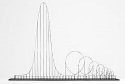
Suicide roller coasterThe Euthanasia Coaster is a roller coaster concept by designer Julijonas Urbonas. The coaster is designed to generate a steady 10g of force on the riders for long enough to cause cerebral hypoxia. Could death by amusement ride be part of our future or is this just too sci-fi to consider?

According to the American Foundation for Suicide Prevention, there were 38,000 suicides reported in 2010. From these figures, the age of 85 and over has remained among the two highest categories since 2000 (and before if we notice this demographic was 20% of all suicides in 2000 - 6 points higher than the next demographic). Only since the most recent economic instability has the age 45-64 moved to the top. Before that, the numbers followed a trend from youngest to oldest with greater age equaling greater rates of suicide.

2030: A Day in the Life of Tomorrow's Kids

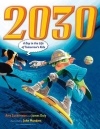
2030 book coverSo much energy goes into the future, both preparing for it and finding ways to retail it, but there aren't many good resources for the kids who will inherit it. 2030: A Day in the Life of Tomorrow's Kids is just that - a resource to help today's kids understand a bit of what their future might hold.

It's a nice resource and at only 30 pages long, it manages to cover a wide range of material, including clothing, communications, living space, careers, our populations, housing developments, transportation, recreation and education. The final page includes a nice list of books, reports and websites the reader can access for additional information.

Public education is about to rush into the 21st century - what will it look like?

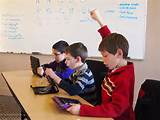
Students in classroom with tabletsK-12 education has been limping along for some time, strung up between two conflicting political viewpoints and hard up for the money required to create a meaningful and beneficial change to an aging system. As technological advancements are refined, schools will be able to offer new and affordable curricula that will change how, when and where students learn and teachers teach.


Pages