Travel (locomotion)

Can technology help dementia sufferers maintain independence?

Elderly woman with hands over faceWhile medicine looks for both the cause and cure of dementia, millions of elderly around the world begin feeling the symptoms every year. New technologies, some existing now and some maturing towards consumer products, offer not only real-time information, they also include ways to inject this information into human interaction with their surroundings. Visual overlays in Google Glass, context aware assistive services such as Google Now, and our ever-present GPS location awareness can combine to provide supportive interactions with our world.

While these advancements are being developed for mass consumer adoption, they can also provide support for individuals who live with limitations such as dementia. I've been working on some ideas on how our elderly might use these devices, struggling to get traction beyond what is easily described and would be used by individuals, whether healthy or dealing with dementia. Then I recently heard about VocalID, a group collecting a range of human voices for the use of those without a voice of their own. In the past, individuals unable to speak were limited to a very small set of digital voices - most of them identical to the voice used by Stephen Hawking. To provide semi-unique voices, Dr Rupal Patel founded the Communication Analysis and Design Laboratory (CadLab) and the VocalID organization - the latter which collects 2-3 hours of donor voices to provide options for individuals suffering from severe speech impairment.

Surveying the future (Pew Research)

Next exit for the future signA new Pew Research Center reports on eight futuristic ideas and whether Americans view them having a positive or negative impact on society:

  • 63% don't want US airspace open to drones.
  • 53% believe devices and implants delivering constant information would have a negative impact on our lives.
  • 9% want a time machine more than any other futuristic invention.
  • 48% want to ride in a driverless car while 50% would not.
  • 8% between 30 and 49 would like a personal robot servant over any other futuristic intention.
  • 19% believe we will have weather control within the next 50 years.
  • 33% believe we will have long-term space colonies within 50 years.
  • 39% believe we will have teleportation with 50 years as well.

Dan Abelow: The journey to our full potential

House comparisonFuturists often explain our potential consumption in the number of planets we would need if everyone lives like a Westerner with large homes, multiple cars, and a dependency on consumerism to drive the economy - the last count I read was six Earths. It's a fair assumption and a questionable habit. In fact, I believe teaching my daughter to control her consumerism will be a key asset in her future no matter where or how she lives.

As part of an ongoing series to introduce his new book, Dan Abelow introduces chapter 1.2 about the Age of Crisis, which he refers to as The Crisis of Success. He sums the crisis up very well in a single sentence:

Our growing Crisis of Success comes from who we are: Everyone wants it all, wants it now, and won’t stop.

A stronger, sexier, younger body

Robot stripper on screenI've been watching this video make the rounds for about two weeks. My first thought upon seeing it was, "How long before Madonna is on the phone with Kurzweil and Kaku to figure out when she can dump her brain into it and plan a new world tour?" Humorous, but hardly kind. Though I'm no fan of Madonna and believe she is narcissistic to the extreme, I also have to admit most of humanity is the same way. If we could push our minds into machines like these, how many of us would and how often?

Ventus

Ventus book coverVentus is one of those scifi novels that strikes a great balance between plot, characters and new technologies - and a few old ones. One of my favorites and it's free on his website (or you can donate something for a novel that offers both education and entertainment with 4 stars on Amazon and 4.6 on Manybooks) if you're looking for something to occupy your weekend until winter finally sails away.

A future of augmented reality for tourism and education

Augmented reality with virtual bear on a handI love history, though I struggle to internalize it without context. I find it challenging to put all those dates and names and places together without a narrative or visual aid. Travelling Europe has helped, especially when I read topical history books before and during the trip, aware of past events and visiting the sites where they occurred. Not everyone can afford the expenses or time to travel, but advancements such as augmented reality may be ready to offer some help.

Augmented reality overlays computer generated images over realtime visuals. The field was limited for mobile use until smartphones with cameras were able to provide a realtime view for a graphical overlay. Phone screens are nice, but limited. Several technologies are coming together to provide data overlays to provide rich environments, including wearable glasses (Google Glass), interactive street views (Google Stretview), and metadata tying content to a space based on both GPS coordinates and date identification. Not the current date, but the time frame the media represents.

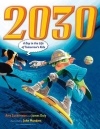
2030: A Day in the Life of Tomorrow's Kids

2030 book coverSo much energy goes into the future, both preparing for it and finding ways to retail it, but there aren't many good resources for the kids who will inherit it. 2030: A Day in the Life of Tomorrow's Kids is just that - a resource to help today's kids understand a bit of what their future might hold.

It's a nice resource and at only 30 pages long, it manages to cover a wide range of material, including clothing, communications, living space, careers, our populations, housing developments, transportation, recreation and education. The final page includes a nice list of books, reports and websites the reader can access for additional information.

Familial harmony in a minivan with a space next to the park

Vanagon on beachWhen his grandparents decided to move to the city, they did so for the future of their children. The farm kept them fed and clothed, but the lifestyle seemed stagnant enough to keep their children's children's children poor. It was a growing issue when compared to the rising wealth of the cities, where they decided life offered more opportunity. They moved as a family, three generations together.

Elysium (Film, 2013)

A look at the living area of ElysiumSet in 2154 (140 years from now), the wealthy have fled an ecologically devastated Earth for the space station Elysium where they live what appears to be a an idyllic life in a pseudo-suburban setting filled with clean air, beautiful vistas, and luxurious homes stocked with miracle health machines.

Where will technology and big data take our future?

Stratasys 3d printed shoes

Technology is slowly infiltrating every area of our human existence. I read Alistair Croll's Race Alongside the Machine today on re/code and it led me to a reflection on how we humans are being changed by the technology we develop and where this might lead in the future.

When I came up with the original idea for a future-focused site, I immediately created a short list I called "aspects of human existence." I've changed them to "elements of how we live" and use them as story tags, a taxonomy vocabulary in Drupal terms, in order to help users find content. After reading Croll's piece, I decided today's exercise would be to look at the (now much longer) list and see what I can come up with for where current trends and predictions will take us as we continue to combine humans, technology and big data.

Pages