Articles

Can we use inquiry based learning to identify when the Singularity arrives?

Red robotOver the weekend, I was listening to This Week in Law's episode from January 31: Deep blue vs The Universe. They started the episode on the topic of the Singularity and James Miller  and Stan Liebowitz discussed how we might know the Singularity has been achieved. Each had a different view on how far into the future this event might occur and what capabilities that intelligence should possess to be considered "intelligent." Both viewpoints were informative, but I found Dr. Liebowitz' statements extremely interesting in how he felt a contrast between an artificial intelligence and a human should be used to identify when the artificial process has reached or surpassed a comparable human capability. Dr Liebowitz shared this thought:

@24:25 - I see things computers can do that people can't, but things people can do that computers can't is what we're talking about.

If I get a robot, it better be funny

 Keep calm and bite my shiny metal ass Hey, marketers. Want me to buy a robot to help around the house? Make it funny. Make it personal. Make it raise my spirits. I can wash my own dishes and mop my own floors. I can get my own mail and cookies (and if I get my cookies, I get how many I want and not how many some @#&%@%$ app says I can eat). Yes, robots can simplify my life by managing regular chores. But can it lift my spirits in real-time?

I can't tell myself jokes or chat with myself about the news. And I'm a bit snarky on a good day - really snarky on a bad day. Of all the robots I could hang with, barring the ScarJoBot my wife will never agree to, Bender would be a hoot (and earned the top spot on this list of funny robots).

Public education is about to rush into the 21st century - what will it look like?

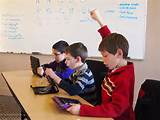
Students in classroom with tabletsK-12 education has been limping along for some time, strung up between two conflicting political viewpoints and hard up for the money required to create a meaningful and beneficial change to an aging system. As technological advancements are refined, schools will be able to offer new and affordable curricula that will change how, when and where students learn and teachers teach.


Will specialized artificial intelligence be kickstarted from a learning perspective?

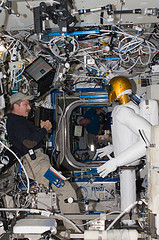
RobonautMany highly intelligent humans predict highly intelligent robots as soon as researchers find the programming and/or hardware to make it work. Theories about the technological singularity, the point at which artificial intelligence surpasses human intelligence, are supported by notable figures such as Ray Kurzweil and Vernor Vinge. It's a very attractive advancement, one in which intelligent systems can help move humanity forward faster than we ourselves are capable of managing. Coupling artificial intelligence with robotics would provide devices capable of not only responding to human need, but identifying human need in real time or even in advance of the need - and not only based on human trends, but on the needs of an individual human.

As an aside, we should also note the Terminator series turns artificial intelligence into Skynet and nearly indestructible robots with time travel capabilities. A far cry from helpful butler-bots, life-saving surgical-bots, and wiggly sex-bots.

Two of Carl Sagan's courses are online

Carl Sagan in front of VikingMaterial for two of Carl Sagan's courses have been digitized and made available online. Not sure how my current math skills (use 'em or lose 'em) would hold up in his planetary science course, but his Critical Thinking in Science and Non-Science Context course looks like a survivable challenge. Available via the Library of Congress.

How will we practice our faith in space?

Kelsey Atherton at Popular Science reports on the response a group of Islamic leaders had about the Mars One colony and their fatwa against making this trip as it is perceived as suicide. Robert Lamb at HowStuffWorks gives a quick overview of how religious leaders have viewed praying in space and how future advancements might impact our religions or create new ones. Part of his presentation explains how prior rulings from Islamic leaders have approved prayer away from Earth.

While much science fiction trends towards either flight from religious dominance or humanity shedding religion through social evolution, the reality is religion and spirituality will remain part of human cultures and evolve over time.

As we add more automation to our lives, will it hurt those around us?

Kid texting while walkingEvan Selinger at Wired gives us an interesting look at how the automated communication in our world can go too far and separate us from the value of an act, instead turning it into a regular switch thrown by a perfectly timed computer system. In his words -

We’re observing the emergence of tech that doesn’t just augment our intellect and lives — but is now beginning to automate and outsource our humanity.

Could a same day 3D print and delivery service protect brands?

USPS as mobile fabricators From the Institute for the Future, we get an artifact where the United States Postal Service offers 3D fabrication from "1000's of certified brands!" An interesting thought and believable as well as more and more companies partner with delivery services to get their packages to customers ASAP.

Pages