Art (music, drama, literature, illustration)

A future of augmented reality for tourism and education

Augmented reality with virtual bear on a handI love history, though I struggle to internalize it without context. I find it challenging to put all those dates and names and places together without a narrative or visual aid. Travelling Europe has helped, especially when I read topical history books before and during the trip, aware of past events and visiting the sites where they occurred. Not everyone can afford the expenses or time to travel, but advancements such as augmented reality may be ready to offer some help.

Augmented reality overlays computer generated images over realtime visuals. The field was limited for mobile use until smartphones with cameras were able to provide a realtime view for a graphical overlay. Phone screens are nice, but limited. Several technologies are coming together to provide data overlays to provide rich environments, including wearable glasses (Google Glass), interactive street views (Google Stretview), and metadata tying content to a space based on both GPS coordinates and date identification. Not the current date, but the time frame the media represents.

Futurepath: 3D printing

Updated 8-7-14 with new content

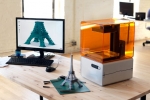
3d printer setupIf you pay any attention to the tech world, you realize 3D printing, also called additive manufacturing, is the next big thing as dozens of startups are racing to get their product to market ahead of the competition. Everything from toys to guns, shoes to pizza - there are printers being developed to print anything we buy.


Where will technology and big data take our future?

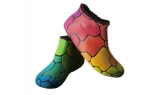
Stratasys 3d printed shoes

Technology is slowly infiltrating every area of our human existence. I read Alistair Croll's Race Alongside the Machine today on re/code and it led me to a reflection on how we humans are being changed by the technology we develop and where this might lead in the future.

When I came up with the original idea for a future-focused site, I immediately created a short list I called "aspects of human existence." I've changed them to "elements of how we live" and use them as story tags, a taxonomy vocabulary in Drupal terms, in order to help users find content. After reading Croll's piece, I decided today's exercise would be to look at the (now much longer) list and see what I can come up with for where current trends and predictions will take us as we continue to combine humans, technology and big data.

Should we open the world to telepresence robots?

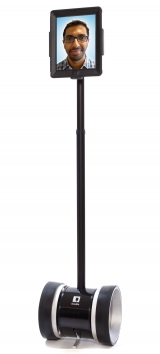
Telepresence robotEngadget reports the Tate Britain museum in London will begin offering remote controlled robotic night tours this summer. The idea is multilayered in that it presents the museum from a telepresence viewpoint and also while the museum is dark, so artwork is only viewable via light on the robot itself.

The 'True Love' Bra

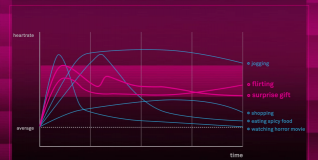
Heart rate responses to various input The Japanese lingerie manufacturer Ravijour has a new product out they call the True Love Tester bra. You can watch the video linked off the Popular Science article for their presentation of how it works, but the truly interesting detail is the graph of heart rate responses to varying stimuli - and how a company looking to market a new product uses our data.

If I understand this correctly, the bra senses the wearer's heart rate and when it "exceeds a certain value, the bra hook is unlocked automatically." A situation where a biological response can act as a trigger may be a bit part of our wearable future, but is it something we can trust or simply a gizmo to play with?

While the novelty isn't world-changing, it is an example of how our biodata can be used in different ways and how wearables can impact the world around us using our biology as a key.

Tiny living space with space-saving ideas

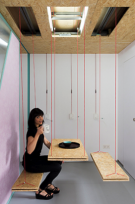
Disappearing tableBack in November, I posted about Japanese Micro-apartments and how they might offer the feeling of space confinement on long-voyage space vessels. On a happier note, Spanish architecture firm Elii takes a tiny (620 square feet) living space and redesigns it to offer useful elements such as hidden storage, disappearing eating space and maximal sunlight penetration.

Vincent Fournier's Post Natural History

Jellyfish

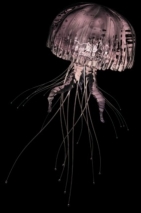
Wired offers an overview of photographer Vincent Fournier's Post Natural History artwork, in which he speeds up the evolution of living organisms to incorporate technological capabilities.

These creatures come from the future—an imagined future, based loosely on current research on synthetic biology and genetic engineering. The idea is that these are living species, reprogrammed by mankind to better fit our environment as well as to adapt to new human desires.

Childlike learning at any age

Takai Hensch, a Harvard professor of molecular and cellular biology, is researching valproic acid* to enhance learning. VPA is used to treat several conditions (see below*), but Hensch is researching the chemical's ability to provide adult brains with the plasticity children experience when it comes to learning new skills and to absorb new information.

In his research (via PubMed.gov), Hensch is focused on teaching adults perfect pitch. But the applications could enable learning in nearly any field. The expectation is an increase in how well adults can take in information in order to speed their learning of new material. When you consider how long it takes to master some specialties, this could help learners increase the speed through which they can cover material and provide extra years of work at higher levels. It would be a major breakthrough for increasing the efficiency of preparing humans for nearly all types of work.

Pages