Should we open the world to telepresence robots?
 Printer-friendly version
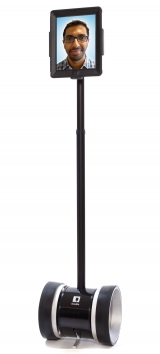 Engadget reports the Tate Britain museum in London will begin offering remote controlled robotic night tours this summer. The idea is multilayered in that it presents the museum from a telepresence viewpoint and also while the museum is dark, so artwork is only viewable via light on the robot itself.
Telepresence robotics is a market full of potential as more companies offer different designs at different pricepoints - prices dropping quickly as the cost of controls continue to reduce. The Double Robotics option (pictured here) uses an iPad to provide the controls, camera and screen in place of internal components.
While the original idea of telepresence was to provide a way to interact at remote locations without the need for expensive and time-consuming travel, three "Workers" have won an award for their idea to open the museum up to four telepresence robots at night. This begs the question: what locations would someone want to visit that isn't normally available at night?
Nearly any tourist attraction robots are capable of navigating (drones anyone?) could be opened this way: museums, religious sites, buildings of interest such as the U.S. Capitol or the U.K.'s House of Parliament (I can also recommend many buildings in Ottawa - they really are quite beautiful and a bit Harry Potteresque). Nearly any site that shuts down over night could offer tours to interested parties around the globe who may never have the opportunity to visit or who would like to see different objects or locations in detail in a short timeframe.
It could also be a source of revenue. If they charge admission to a visitor, they could also charge a fee for hourly access to the robot. Use these to maximize access to innanimate objects in a way that doesn't require constant vigilance by museum staff or on-site payments by tellers.
But that raises this question: would you pay the price of a movie ticket to tour the Louvre via robot for the same two hours? Would 3D viewing in real-time make a difference? What places would you be willing to visit using this technology?
 Interested in the social impact of our future advancements, Daryl developed and built Regarding Tomorrow as a platform to share and discuss our collective hopes and fears of the future. Daryl's background is in education, including graduate studies in special needs and a masters in instructional technology from UVA's Curry School of Education. He has worked as a high school teacher and has over 10 years of university experience in the US and Canada.