Commerce (trade)

Abundance: The Future Is Better Than You Think

Book coverIn Abundance, Peter Diamandis and Steven Kotler present trends taking us towards a better future - one in which individual needs are met on a global scale. Using Maslow's Hierarchy of Needs as a foundation, they explore technology will find ways to improve efficiency by fostering cooperation, providing access to clean water, producing enough food for a planet of nine billion, and even enabling equality as limitations dissipate.

Many projections offer a future half empty. Here, we get a lesson on how our biases enable close tracking of negative trends, whether serious, global issues or personal issues threatening a comfortable ideal we would not wish to give up. Yet, data show the world is improving. As an example, Bill Gates' annual letter from this past January presents how effective support of poor economies is stabilizing population, improving health, and helping develop economies capable of supporting human rights and freedom.

The point of Abundance is that we can both thrive as a race, free of draconian measures to tame our needs, and solve our problems going forward, using new methods and technologies to empower humanity. Why settle for half empty or half full, when the future can be filled to the brim?

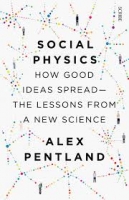
Social Physics

Social Physics book coverAccording to Wikipedia, Alex Pentland's areas of research include social physics, big data, and privacy. In his book, Social Physics, Pentland takes us through the benefits and issues, such as the loss of privacy, that come from comprehensive tracking. It's a short book with a deep look at how the Internet of Things and the quantified self will collect data to change the world around us and better our lives.

Focused on human behavior, the book offers a look at the range of benefits that could result from our hyperconnected world. These include idea flow to spread and advance new ideas, methods for bringing people into problem-solving scenarios to fast prototype solutions, and ways cities can take the density of its members, services, and infrastructure together to improve efficiency while providing the best living experience for the humans who call it home. At its heart, the work focuses on ways we can use data to find better methods for improving how we work together, but it also hints at the promise of an abundant future where mountains of data provide true insight to the best ways we can work together.

While that sounds promising, Pentland doesn't look at the world through rose colored glasses, but acknowledges how this data can and will impact our privacy. So he also proposes simple laws designed to allow the collection of data while protecting citizens from its inappropriate use (at least without our permission).

Social Physics is a course in a book by one of, if not THE expert in this field. Pentland offers a thorough and digestible look at the field and what it offers our future.
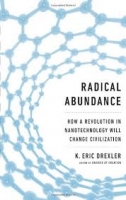
Radical Abundance: How a Revolution in Nanotechnology Will Change Civilization

Book coverEric Drexler introduced the world to nanotechnology in his first book, Engines of Creation: The Coming Era of Nanotechnology. In his newest book, Radical Abundance, Drexler presents a range of information, informing the reader of the process of nanoscale manufacturing, current efforts and research (and hurdles), and the benefits to science, society, and the planet once we achieve the reality of nanoscale fabrication.

Drexler presents APM (atomically-precise manufacturing) as the next revolution, the first three being agriculture, industrial, and information. This revolution will be powered once we control "the molecular machinery of life (using) proteins that can fit together to form motors, sensors, structural frameworks, and catalytic devices..." By using natural systems to construct from the atomic level towards larger and more complex products, we can manufacture efficiently, using common chemical substances in place of minerals and metals acquired through ecologically damaging mining, and to create materials we cannot visualize today.

In Drexler's future, APM solves many of the societal issues that create poverty, ecological disasters, and conflict. It's an important work that gives us a future to look forward to when so many visions are broken and dystopian.

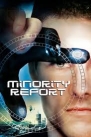
Minority Report (2002)

Film posterBased on "The Minority Report," a short story by Philip K. Dick, this film explores the issue of preventing crime before it occurs. The PreCrime division, a special unit set in Washington, D.C., uses three individuals who possess the ability to foresee murders before they occur. When each case is identified, including the victim, the perpetrator, and the time, the PreCrime police use recorded visuals from the "precog's" visions to identify the location and foil the crime before it happens.

While the division has had great success and is considered perfect, the film focuses on what happens if these visions are not 100% reliable. Especially when the perpetrators are arrested and imprisoned when they were not allowed to actually commit the crime.

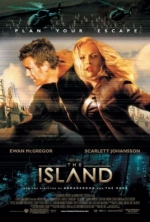
The Island (2005)

The Island dvd coverClones are big business in the future. Buy your own to supply the parts you require when sickness or injury threaten your life. The Island is a sci-fi action adventure set in the not-too-distant future, told from the viewpoint of two clones as they discover the truth of their existence and work to uncover corporate inhumanity.

Lincoln Six Echo and Jordan Two Delta are clones living in a safe, controlled world among others of their kind. History tells the outside world is too contaminated for life outside the compound, with only one remaining island clean enough to support human life. The clones live their routine hoping to one day win the lottery and move to the island, where they can live out their lives under the sun. But it's all a lie fabricated to keep them controlled and hopeful, two things necessary for the products, their bodies, to remain healthy.

Using the past to forecast the future

Flying carPredicting the future goes hand-in-hand with preparing for the future, a skill humans have developed to survive tough times and to make their world a better place (mostly, but not always). While we live at a point where futurism is growing more mainstream, even if the term and field are not household names, futurists have made predictions for some time. Ed Fries, formerly of Microsoft, has shared his collection of century old, French futurist postcards in which artists forecast life in 2012.

The postcards depict a variety of scenes, including the one above where a family takes a trip to the moon. Others include a Skype-like system of communication, flying cars, and aquanauts riding seahorses. You can see them at Wired, in an article by Greg Miller.

Can technology help dementia sufferers maintain independence?

Elderly woman with hands over faceWhile medicine looks for both the cause and cure of dementia, millions of elderly around the world begin feeling the symptoms every year. New technologies, some existing now and some maturing towards consumer products, offer not only real-time information, they also include ways to inject this information into human interaction with their surroundings. Visual overlays in Google Glass, context aware assistive services such as Google Now, and our ever-present GPS location awareness can combine to provide supportive interactions with our world.

While these advancements are being developed for mass consumer adoption, they can also provide support for individuals who live with limitations such as dementia. I've been working on some ideas on how our elderly might use these devices, struggling to get traction beyond what is easily described and would be used by individuals, whether healthy or dealing with dementia. Then I recently heard about VocalID, a group collecting a range of human voices for the use of those without a voice of their own. In the past, individuals unable to speak were limited to a very small set of digital voices - most of them identical to the voice used by Stephen Hawking. To provide semi-unique voices, Dr Rupal Patel founded the Communication Analysis and Design Laboratory (CadLab) and the VocalID organization - the latter which collects 2-3 hours of donor voices to provide options for individuals suffering from severe speech impairment.

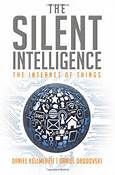
The Silent Intelligence: The Internet of Things

The Silent Intelligence book coverThe term "Internet of Things" is thrown around a lot, even used in parallel with other terms describing the same thing for a specific area of focus. Even after reading a range of articles over the last few years, I felt my understanding remained a bit vague and decided to look for a resource with depth and breadth. Kellermeit and Obodovski's The Silent Intelligence: The Internet of Things comes highly rated on Amazon (4.5 stars) and seemed more informational than application-oriented books such as McEwen and Cassimally's Designing the Internet of Things, or Robert Scoble and Shel Israel's Age of Context: Mobile, Sensors, Data and the Future of Privacy - which I plan to read as well.

Will the future reduce our work hours?

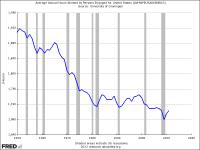
Average yearly work hours for AmericansIt's a complex issue and there are bound to be unexpected consequences. Historic data show reduced hours per American workers since 1950 when the average American workers' hours were 1,920 per year to 1700 in 2012. Averaged per week, our work week has shrunk from 37 to 33 hours per week in 60 years.

Sadly, these work hour reductions aren't spread evenly. While the work week has shrunk, it has more to do with companies reducing their full time positions to reduce benefit costs. In truth, salaried employees and specialized blue collar workers have seen an increase in their hours since the 1980's. At Salon, Sara Robinson offers a history of the 40-hour work week, including how it came about and why it is becoming more rare of late.

Future Babble

Future Babble coverWhy do we try to predict the future? According to Dan Gardner, it's because of our human need to protect ourselves that we are constantly attempting to recognize risk before the lions, tigers and bears descend upon us. In Future Babble: Why Expert Predictions are Next to Worthless and You Can Do Better, Gardner provides historical insights on the types of futurists able to make the most reliable predictions. Guess what? Those predictions don't come from experts in a field, they come from people with a wide range of knowledge looking at trends from different angles.

Pages