Commerce (trade)

Dan Abelow: The journey to our full potential

House comparisonFuturists often explain our potential consumption in the number of planets we would need if everyone lives like a Westerner with large homes, multiple cars, and a dependency on consumerism to drive the economy - the last count I read was six Earths. It's a fair assumption and a questionable habit. In fact, I believe teaching my daughter to control her consumerism will be a key asset in her future no matter where or how she lives.

As part of an ongoing series to introduce his new book, Dan Abelow introduces chapter 1.2 about the Age of Crisis, which he refers to as The Crisis of Success. He sums the crisis up very well in a single sentence:

Our growing Crisis of Success comes from who we are: Everyone wants it all, wants it now, and won’t stop.

Tracking behavior: corporate control or assigning responsibility where it belongs?

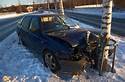
Car hit treeAs greater details of our lives can be tracked, data analysis can show trends in our behavior against the norm. When I view personal privacy, I ask three things:

  1. Why does someone need to know my preferences and tendencies?
  2. Can this data positively impact myself or my family?
  3. Can this data negatively impact myself or my family?

Suicide in an aging world: could it become an industry?

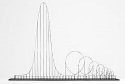
Suicide roller coasterThe Euthanasia Coaster is a roller coaster concept by designer Julijonas Urbonas. The coaster is designed to generate a steady 10g of force on the riders for long enough to cause cerebral hypoxia. Could death by amusement ride be part of our future or is this just too sci-fi to consider?

According to the American Foundation for Suicide Prevention, there were 38,000 suicides reported in 2010. From these figures, the age of 85 and over has remained among the two highest categories since 2000 (and before if we notice this demographic was 20% of all suicides in 2000 - 6 points higher than the next demographic). Only since the most recent economic instability has the age 45-64 moved to the top. Before that, the numbers followed a trend from youngest to oldest with greater age equaling greater rates of suicide.

How will personal drones impact our society?

Camera drone in flightNoah Smith offers his assessment of the social impact of  drones on Quartz.  He asserts they will cause the most societal upheaval in 700 years since the adoption of the gun. For military power, Smith is forecasting a shift in battlefield technology towards the use of piloted and eventually autonomous drones and robots.

On course to collapse or a future of abundance?

Deserted farmNews this week from a NASA sponsored study on the possibility of civilization collapse and how it might happen. The study was led by applied mathematician Safa Motesharrei and looked at five factors leading to historical collapses of past civilizations such as the Roman empire: population, climate, water, agriculture, and energy.

Will we have a future of extreme inequality and bountiful resources?

Robot speaking in publicThey say in every utopia there is a subclass for whom it is a dystopia. In mainstream futuristic media, the story often overlooks the economy unless it offers a political statement supporting their view and/or damning the opposition’s take on things. But the future is beginning to look a bit strange. On one side, the ability to provide ample resources in the first world has some questioning if poverty can even exist in countries like the US, Canada, and the original EU member states such as Britain, France and Germany. An article I recall from some time ago asked the question, “Can you be considered poor if you have a flatscreen TV in your home?”

Science fiction is the new R&D

When I imagined Regarding Tomorrow as a social site, part of it was crowdsourcing member ideas to build towards greater accuracy of what the future might hold - specifically how new advancements might impact our cultures. Always on the lookout for information helping me to better understand what the site needs to offer, I ran across three tweets today, all very close to one another, that struck a chord as I consider my first major site refresh.

The first was from Ali Madad:

Familial harmony in a minivan with a space next to the park

Vanagon on beachWhen his grandparents decided to move to the city, they did so for the future of their children. The farm kept them fed and clothed, but the lifestyle seemed stagnant enough to keep their children's children's children poor. It was a growing issue when compared to the rising wealth of the cities, where they decided life offered more opportunity. They moved as a family, three generations together.

Pages