Education (learning)

A future of augmented reality for tourism and education

Augmented reality with virtual bear on a handI love history, though I struggle to internalize it without context. I find it challenging to put all those dates and names and places together without a narrative or visual aid. Travelling Europe has helped, especially when I read topical history books before and during the trip, aware of past events and visiting the sites where they occurred. Not everyone can afford the expenses or time to travel, but advancements such as augmented reality may be ready to offer some help.

Augmented reality overlays computer generated images over realtime visuals. The field was limited for mobile use until smartphones with cameras were able to provide a realtime view for a graphical overlay. Phone screens are nice, but limited. Several technologies are coming together to provide data overlays to provide rich environments, including wearable glasses (Google Glass), interactive street views (Google Stretview), and metadata tying content to a space based on both GPS coordinates and date identification. Not the current date, but the time frame the media represents.

On course to collapse or a future of abundance?

Deserted farmNews this week from a NASA sponsored study on the possibility of civilization collapse and how it might happen. The study was led by applied mathematician Safa Motesharrei and looked at five factors leading to historical collapses of past civilizations such as the Roman empire: population, climate, water, agriculture, and energy.

World Science U provides online science education

World Science U course blocksWhen I was younger, science seemed to be something far away. While we were surrounded by the products of science, we rarely witnessed the creation event of life changing technology or advancement. With the Internet, we see products months or even years before they arrive and can often access media detailing how they were invented, designed and manufactured.

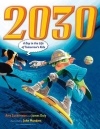
2030: A Day in the Life of Tomorrow's Kids

2030 book coverSo much energy goes into the future, both preparing for it and finding ways to retail it, but there aren't many good resources for the kids who will inherit it. 2030: A Day in the Life of Tomorrow's Kids is just that - a resource to help today's kids understand a bit of what their future might hold.

It's a nice resource and at only 30 pages long, it manages to cover a wide range of material, including clothing, communications, living space, careers, our populations, housing developments, transportation, recreation and education. The final page includes a nice list of books, reports and websites the reader can access for additional information.

Will we have a future of extreme inequality and bountiful resources?

Robot speaking in publicThey say in every utopia there is a subclass for whom it is a dystopia. In mainstream futuristic media, the story often overlooks the economy unless it offers a political statement supporting their view and/or damning the opposition’s take on things. But the future is beginning to look a bit strange. On one side, the ability to provide ample resources in the first world has some questioning if poverty can even exist in countries like the US, Canada, and the original EU member states such as Britain, France and Germany. An article I recall from some time ago asked the question, “Can you be considered poor if you have a flatscreen TV in your home?”

Public education is about to rush into the 21st century - what will it look like?

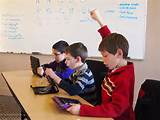
Students in classroom with tabletsK-12 education has been limping along for some time, strung up between two conflicting political viewpoints and hard up for the money required to create a meaningful and beneficial change to an aging system. As technological advancements are refined, schools will be able to offer new and affordable curricula that will change how, when and where students learn and teachers teach.


Two of Carl Sagan's courses are online

Carl Sagan in front of VikingMaterial for two of Carl Sagan's courses have been digitized and made available online. Not sure how my current math skills (use 'em or lose 'em) would hold up in his planetary science course, but his Critical Thinking in Science and Non-Science Context course looks like a survivable challenge. Available via the Library of Congress.

Where will technology and big data take our future?

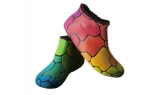
Stratasys 3d printed shoes

Technology is slowly infiltrating every area of our human existence. I read Alistair Croll's Race Alongside the Machine today on re/code and it led me to a reflection on how we humans are being changed by the technology we develop and where this might lead in the future.

When I came up with the original idea for a future-focused site, I immediately created a short list I called "aspects of human existence." I've changed them to "elements of how we live" and use them as story tags, a taxonomy vocabulary in Drupal terms, in order to help users find content. After reading Croll's piece, I decided today's exercise would be to look at the (now much longer) list and see what I can come up with for where current trends and predictions will take us as we continue to combine humans, technology and big data.

Should we open the world to telepresence robots?

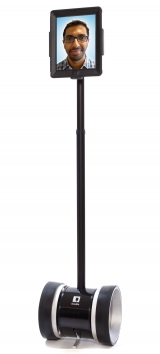
Telepresence robotEngadget reports the Tate Britain museum in London will begin offering remote controlled robotic night tours this summer. The idea is multilayered in that it presents the museum from a telepresence viewpoint and also while the museum is dark, so artwork is only viewable via light on the robot itself.

Pages