Habitation (dwelling)

Futurepath: Energy

Energy mosaicFrom ultra-modern Manhattan penthouses to cell phones and radios in sub-Saharan homes, from private jets zipping over the oceans to motor scooters in southeast Asia - we require energy to power our lives. At this point, only protected Amazon tribes and the few humans who have chosen to live off the energy grid do not use any of the world's energy supplies.

Overall, we humans use in excess of 500 exajoules of energy per year. The energy we produce is derived by a variety of sources such as nuclear; fossil fuels, including coal, crude, and gas; and renewables such as wind, hydro, and solar. These fuels are broken into two main types of use, the first is locomotion via fuel burning engines and the second is the creation of electricity, which is then used as a source of power for motors, lights, appliances, and the gadgets we use (to name a few).

Futurepath: Energy

Energy mosaicFrom ultra-modern Manhattan penthouses to cell phones and radios in sub-Saharan homes, from private jets zipping over the oceans to motor scooters in southeast Asia - we require energy to power our lives. At this point, only protected Amazon tribes and the few humans who have chosen to live off the energy grid do not use any of the world's energy supplies.

Overall, we humans use in excess of 500 exajoules of energy per year. The energy we produce is derived by a variety of sources such as nuclear; fossil fuels, including coal, crude, and gas; and renewables such as wind, hydro, and solar. These fuels are broken into two main types of use, the first is locomotion via fuel burning engines and the second is the creation of electricity, which is then used as a source of power for motors, lights, appliances, and the gadgets we use (to name a few).

The Hyperloop is down...speculative fiction by Crave's Eric Mack

Eric Mack, from CNET's Crave, wrote a two piece story using today's news to speculate on what the futre might look like a decade or two from now. Worth a few minutes read to see what he thinks about a few things. Especially with humor like this:

With all my high-speed transport options out of commission for the day, I should be posting my own angry EEG GIF showing my brainwaves mashed up with some vintage footage from an old Dwayne Johnston flick, back before he was elected, before his groundbreaking presidency united the American and Canadian states (largely to allow for American drone fleets to better protect Arctic borders from polar pirates) and led to the annexation of Mexico, back when -- for some reason -- everyone simply called him "The Rock."

Part 1: The Hyperloop is down and I'm late for work
and part 2: Smart wig on and lightsaber packed, I visit the future.

Enjoy.

Gamma

Factory Fifteen makes visually stunning short films and 'Gamma' is no exception. The story is set after nuclear wars have left some cities irradiated husks. Gamma is a product designed to clean the cities and make them habitable again. An artificial lifeform made from fungi and molluscs, the Gamma spores are seeded via floating ships and promise to make the cities safe within months. Sadly, this doesn't happen and we hear the narrator tell the tale of his home's fate.

Six and a half minutes long, 'Gamma' is worth a quick watch. It touches on issues surrounding modified life and what happens when they don't live up to the hype.

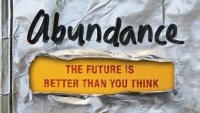
Abundance: The Future Is Better Than You Think

Book coverIn Abundance, Peter Diamandis and Steven Kotler present trends taking us towards a better future - one in which individual needs are met on a global scale. Using Maslow's Hierarchy of Needs as a foundation, they explore technology will find ways to improve efficiency by fostering cooperation, providing access to clean water, producing enough food for a planet of nine billion, and even enabling equality as limitations dissipate.

Many projections offer a future half empty. Here, we get a lesson on how our biases enable close tracking of negative trends, whether serious, global issues or personal issues threatening a comfortable ideal we would not wish to give up. Yet, data show the world is improving. As an example, Bill Gates' annual letter from this past January presents how effective support of poor economies is stabilizing population, improving health, and helping develop economies capable of supporting human rights and freedom.

The point of Abundance is that we can both thrive as a race, free of draconian measures to tame our needs, and solve our problems going forward, using new methods and technologies to empower humanity. Why settle for half empty or half full, when the future can be filled to the brim?


Afterparty

Afterparty book coverSet in the near future, Afterparty explores a world where psychoactive drugs are printable. All you need is a chemjet printer and an Internet connection to begin printing designer drugs on paper, which is torn up and digested for each hit. The story follows Lyda Rose, one of the five founders of Little Sprout, a group trying to find a cure for schizophrenia, a condition from which Lyda's mother suffered.

The group is successful and Numinous is ready for trials when an event changes their lives. In high enough doses, Numinous permanently alters the user's perception by imprinting a bond with whatever god they believe in, often paired with hallucinations of a holy figure to watch over or even run their lives. Lyda believed the recipe was off the market, but then someone shows up in her ward who is clearly under its effect.

Angered by this, Lyda leaves care early with plans to find the source. With help from a few friends, not all of them real, she goes on a thrilling adventure across Canada and the United States in search of answers.

Love Minus Eighty

Love Minus Eighty book coverWelcome to the early 22nd century. Social media connects the elite in real time, and the digital divide has birthed a divide so complete it has manifested a near-complete physical disconnect. And while our mortality has not been conquered, reanimation has been perfected for those who can afford it. For those who can't, there is 'freezing insurance.' And for pretty, young women who can afford insurance, but not reanimation, there is a partial life in the 'bridesicle' dating service, where if you're pretty and willing enough, a one-percenter might marry you on your deathbed before taking you home as a bride-slave.

Will McIntosh's short story "Bridesicle" won both the Hugo Award and Asimov's Reader Poll in 2010, and was a finalist for the same year's Nebula Award. Love Minus Eighty is based on the short story and a brilliant dystopian look at a future that forecasts many of today's headline issues. McIntosh offers a very engaging world where the storyline shifts between High Town and the suburbs, contrasting the have's and have-not's of the world. Looking at the social changes, it feels like McIntosh did a good job of taking some of our current systems such as social media and incoming advancements such as life-expansion and autonomous systems forward in ways that are both promising and sour to current tastes.

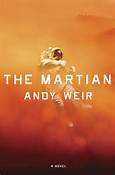
The Martian

The Martian book coverA Martian storm forces Mark Watney's crew to end their mission just a few days into their 31 days on Mars. Separated from his crew, Watney is left behind to find ways to survive with slim hope of a rescue. An engaging novel from page one, The Martian provides detailed engineering and scientific realities as Watney, a botanist and engineer, overcomes a range of issues in his quest to survive as the lone occupant of the planet.

I'll make no bones about it, The Martian is the best novel I've read in years. Weir picks up right at the beginning of Watney's realization his crew has abandoned him, and keeps you on the edge of your seat. In addition to Watney's perspective, he includes the workings and politics of NASA, and presents a world where all of Earth is rooting for one of our own stranded alone. Weaving it all together offers the reader a roller coaster full of science and engineering that will teach as much as it entertains.

Can technology help dementia sufferers maintain independence?

Elderly woman with hands over faceWhile medicine looks for both the cause and cure of dementia, millions of elderly around the world begin feeling the symptoms every year. New technologies, some existing now and some maturing towards consumer products, offer not only real-time information, they also include ways to inject this information into human interaction with their surroundings. Visual overlays in Google Glass, context aware assistive services such as Google Now, and our ever-present GPS location awareness can combine to provide supportive interactions with our world.

While these advancements are being developed for mass consumer adoption, they can also provide support for individuals who live with limitations such as dementia. I've been working on some ideas on how our elderly might use these devices, struggling to get traction beyond what is easily described and would be used by individuals, whether healthy or dealing with dementia. Then I recently heard about VocalID, a group collecting a range of human voices for the use of those without a voice of their own. In the past, individuals unable to speak were limited to a very small set of digital voices - most of them identical to the voice used by Stephen Hawking. To provide semi-unique voices, Dr Rupal Patel founded the Communication Analysis and Design Laboratory (CadLab) and the VocalID organization - the latter which collects 2-3 hours of donor voices to provide options for individuals suffering from severe speech impairment.

Pages