Posthumanity (cyborg)

Can technology help dementia sufferers maintain independence?

Elderly woman with hands over faceWhile medicine looks for both the cause and cure of dementia, millions of elderly around the world begin feeling the symptoms every year. New technologies, some existing now and some maturing towards consumer products, offer not only real-time information, they also include ways to inject this information into human interaction with their surroundings. Visual overlays in Google Glass, context aware assistive services such as Google Now, and our ever-present GPS location awareness can combine to provide supportive interactions with our world.

While these advancements are being developed for mass consumer adoption, they can also provide support for individuals who live with limitations such as dementia. I've been working on some ideas on how our elderly might use these devices, struggling to get traction beyond what is easily described and would be used by individuals, whether healthy or dealing with dementia. Then I recently heard about VocalID, a group collecting a range of human voices for the use of those without a voice of their own. In the past, individuals unable to speak were limited to a very small set of digital voices - most of them identical to the voice used by Stephen Hawking. To provide semi-unique voices, Dr Rupal Patel founded the Communication Analysis and Design Laboratory (CadLab) and the VocalID organization - the latter which collects 2-3 hours of donor voices to provide options for individuals suffering from severe speech impairment.

The Bourne Legacy

Bourne Legacy cover

Sometimes a great look at the future shows up in places you weren't looking. The Bourne Legacy, the sequel to the trilogy with Jeremy Renner (Hawkeye in the Avengers) taking the lead role, is a fast-paced look at posthumanism and one of the better futurist films I've watched in some time.

I'd mostly ignored Legacy, figuring it would eventually hit Netflix, but found it in the library on Blu-ray this week and picked it up. Finding some free time today, I started watching and was blown away as the back story came together piece by piece. Sometimes the best views of the future arrive in a medium other than science fiction.

Stop here if you don't want to read spoilers. But this is a great movie and worth checking out.

A Woman Sold for Her Brains and Body

"And this, Mr. Trupp, is our greatest gem."

The attendant led the woman...no, girl this time...by the hand as she had the others. Warren wondered if this 'demo mode' hurt them or if they were even aware of the time passing.

As with the others, the attendant brought her into the room, told her to twirl and sat her on the sofa opposite him. Mr. Lomen reached up to caress her cheek with two fingers. The girl did not flinch or even seem to notice his presence.

Science fiction is the new R&D

When I imagined Regarding Tomorrow as a social site, part of it was crowdsourcing member ideas to build towards greater accuracy of what the future might hold - specifically how new advancements might impact our cultures. Always on the lookout for information helping me to better understand what the site needs to offer, I ran across three tweets today, all very close to one another, that struck a chord as I consider my first major site refresh.

The first was from Ali Madad:

Elysium (Film, 2013)

A look at the living area of ElysiumSet in 2154 (140 years from now), the wealthy have fled an ecologically devastated Earth for the space station Elysium where they live what appears to be a an idyllic life in a pseudo-suburban setting filled with clean air, beautiful vistas, and luxurious homes stocked with miracle health machines.

Where will technology and big data take our future?

Stratasys 3d printed shoes

Technology is slowly infiltrating every area of our human existence. I read Alistair Croll's Race Alongside the Machine today on re/code and it led me to a reflection on how we humans are being changed by the technology we develop and where this might lead in the future.

When I came up with the original idea for a future-focused site, I immediately created a short list I called "aspects of human existence." I've changed them to "elements of how we live" and use them as story tags, a taxonomy vocabulary in Drupal terms, in order to help users find content. After reading Croll's piece, I decided today's exercise would be to look at the (now much longer) list and see what I can come up with for where current trends and predictions will take us as we continue to combine humans, technology and big data.

Extremis - Iron Man becomes posthuman

ExtremisWarren Ellis introduced the Extremis concept to Iron man in a 6-issue story arc starting in January 2005. This arc changed Tony Stark from a cyborg to a posthuman by introducing nanotechnology into his body and altering his physiology to include direct connections with the Iron Man suit. Ellis introduced many concepts and characters that were used in the Iron Man movie trilogy, especially Iron Man 3.

If you're into superhero comics, this is a short arc you don't want to miss. It's available on Marvel Unlimited or through Amazon. In typical comic-book style, it takes some complex scientific breakthroughs and turn them into a magical elixir, yet it brings many of the reasons we research posthuman adaptation into perspective given Stark's need to deal with the story villains. And there are a few great conversations in which characters wax philosophical about their Frankensteinian need to create a future that might be more monster than they would like.

The Future of the Mind: The Scientific Quest to Understand, Enhance, and Empower the Mind

Dr. Kaku provides of his new book and how our understanding of the human mind will enable some amazing feats in the near future - including the ability to record  thoughts in rats and be able to play them back into the rat's brain so the thought is relearned by the animal.

What are the long term social impacts of neuro-enhancing technologies?

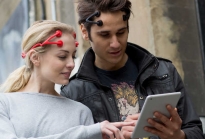
A couple wearing Foc.us devicesWired's Christian Jarrett covers a new technology designed to "overclock your brain." It's a great article in which he thoroughly covers the spectrum of what benefits the Foc.us offers, a bit of history, and some of the warnings we should be aware of.

For this article, let's pretend it is possible to use electrical current to stimulate our brains, making the user "smarter." What are the social impacts? Let's look at a few.

Pages