Yes, there is now an app for when to keep it in your pants (or take them off)
 Printer-friendly version
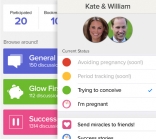 Glow is an app for iOS and Android devices designed to assist women (and couples) with tracking and controlling their reproductive health by identifying their activity cycle. Founded by PayPal co-founder Max Levchin, the company offer two ways to help women or couples looking to conceive (or not).
The first is the app itself, which details such as their sexual activity, menstruation cycle, BMI and any discomfort from which it attempts to identify the days sex is most likely to result in conceiving. These details can be used in multiple ways, the two primary benefits being the ability when to tray to conceive and when to avoid sexual activity in order to avoid conceiving.
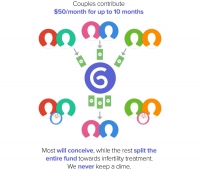 To further assist, they have also founded a non-profit organization named Glow First, which helps women or couples gain financial help by pooling their risk. After contributing $50 per month for up to 10 months, if a child has not been conceived after 11 months, money from the pool can be paid towards an accredited infertility clinic towards medical costs.
But there is a catch: In order to remain eligible, you must also maintain a daily log for the full 10 months or until pregnant.
I'm a man and can't track any (well, most) of these details from my own body, but these are extremely personal details for any woman. Details most would not share without a need. And while I'm sure there is considerable security built into the device and how it shares with Glow's servers and that the data is anonymous, recent concerns over Google's purchase of Next - and the data they could access as a result - has to be mirrored with this company. What if they're purchased? What if their servers are hacked? How anonymous is the data?
Not to pick on Glow. I think this is fascinating technology, data tracking that will really some couples looking to make a child. But the more I read through their website, the more I wonder how deep the "app-ification" of our lives can go. And this app doesn't require a wearable device, it's simply personal input.
If I look for a scary parallel, I think we look no farther than health insurance. How soon before we get a payout if we track our lifestyle for a year? How far out are we required to track our lifestyle for access to a more affordable tier? What will the conditions of our service contract allow if the company finds out we lied/forgot or did something not within the contract?
 In Bruce Sterling's Holy Fire, Mia has to follow a very regimented lifestyle in order to earn access to an experimental surgery to reset her biological clock to that of a twenty year old. A great novel I need to go back and reread.
 Interested in the social impact of our future advancements, Daryl developed and built Regarding Tomorrow as a platform to share and discuss our collective hopes and fears of the future. Daryl's background is in education, including graduate studies in special needs and a masters in instructional technology from UVA's Curry School of Education. He has worked as a high school teacher and has over 10 years of university experience in the US and Canada.