Curated content

Is this accurate of our past and, if so, should it define our future?

Man on trash mountainMan by Steve Cutts is a visceral animation depicting the history of mankind...ahem...bleeding into a possible view of our future. He focuses on our destructive nature, highlighting choices we've made some find cruel and wasteful and leading towards a demise by...well, you can see the ending yourself. Just 3:35 and worth the time.

World Science U provides online science education

World Science U course blocksWhen I was younger, science seemed to be something far away. While we were surrounded by the products of science, we rarely witnessed the creation event of life changing technology or advancement. With the Internet, we see products months or even years before they arrive and can often access media detailing how they were invented, designed and manufactured.

Two of Carl Sagan's courses are online

Carl Sagan in front of VikingMaterial for two of Carl Sagan's courses have been digitized and made available online. Not sure how my current math skills (use 'em or lose 'em) would hold up in his planetary science course, but his Critical Thinking in Science and Non-Science Context course looks like a survivable challenge. Available via the Library of Congress.

How will we practice our faith in space?

Kelsey Atherton at Popular Science reports on the response a group of Islamic leaders had about the Mars One colony and their fatwa against making this trip as it is perceived as suicide. Robert Lamb at HowStuffWorks gives a quick overview of how religious leaders have viewed praying in space and how future advancements might impact our religions or create new ones. Part of his presentation explains how prior rulings from Islamic leaders have approved prayer away from Earth.

While much science fiction trends towards either flight from religious dominance or humanity shedding religion through social evolution, the reality is religion and spirituality will remain part of human cultures and evolve over time.

As we add more automation to our lives, will it hurt those around us?

Kid texting while walkingEvan Selinger at Wired gives us an interesting look at how the automated communication in our world can go too far and separate us from the value of an act, instead turning it into a regular switch thrown by a perfectly timed computer system. In his words -

We’re observing the emergence of tech that doesn’t just augment our intellect and lives — but is now beginning to automate and outsource our humanity.

Could a same day 3D print and delivery service protect brands?

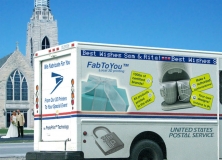
USPS as mobile fabricators From the Institute for the Future, we get an artifact where the United States Postal Service offers 3D fabrication from "1000's of certified brands!" An interesting thought and believable as well as more and more companies partner with delivery services to get their packages to customers ASAP.

Artifact from the Future: Choice Reducer 5000

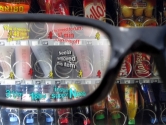
Choice reducer 5000 viewThere has been quite a bit of debate over adding facial recognition and allowing pop-up marketing on devices such as Google Glass - think iBeacon updates as an overlay on your vision. Today's IFTF artifact gives some control back to shoppers, using information overlays to help us identify the risk/reward for snacking.

Though I have to wonder if facial recognition could be just as useful. Walk in to a party and get an overlay of someone's real age, Facebook relationship status, favorite book or film, and how many times they've been married. Oh, and throw in their credit rating and you might fend off the jackals.

What will it take for you to get a data chip embedded in your body?

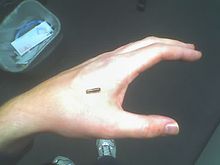
RFID chipData chip implants
What it is - Implants embedded in our bodies. They allow us to access current services such as GPS and RFID. In the future, they can be used to store medical device and other data, connect with cellphone systems and even connect with friends as a form of artificial telepathy.

Pages