Curated content

Using cybernetics to synthesize biology and create an "Internet of Living Things"

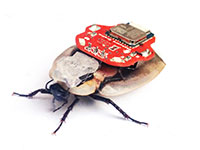
Robot roach In an article on Huffington Post, Professor Lee Cronin offers some insight and asks some interesting questions about the future of cybernetic biology. He specifically focuses on developing an ability to control bacteria and plants in order to create a networkable ecosystem we could use to benefit society.

He also asks for ways such a technology could be misused. It's a brief, but compelling piece pointing out the benefits, concerns and even the issues of avoiding such research. Certainly worth reading to get some insight into an expert's view of this future and some of his points about how starting the conversation ahead of the ability can benefit researchers to increase technology safety before it arrives.

For more information on Gage and Marzullo's research, check out our article on their work.

Cybernetic Synthetic Biology And The Internet of Living Things via Huffington Post
What will future jobs look like?

Andrew McAfee, one of the authors of The Second Machine Age, gives a presentation on the future of jobs as one of his TED talks. He provides a nice overview of the benefits and challenges of "the new machine age" and, on the human side, who will be impacted. At 15 minutes long, it's a fairly complete overview on the topic and how our societies might adapt to prepare our children and the adult unemployed for this change.

Do We Need Humans?

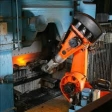
Robot workerThere is a lot of speculation on the technological singularity - the point at which artificial intelligence has progressed beyond human intelligence. Between AI and advanced engineering, humans could quickly become extraneous to modern society, especially from the viewpoint of those who own the robots and see extra humans as needful beings who return little to the planet.

That's a very dystopian view, but a possible outcome all the same. The February 28, 2014 episode of NPR's Ted Radio Hour offers four viewpoints on the future of humanity.

Train your Robot Well - This Week in Law

Our Final Invention book cover#255 of This Week in Law's weekly discussion focuses on the various issues we may face when regulating robots in the future. The discussion revolves around James Barrat's book Our Final Invention: Artificial Intelligence and the End of the Human Era.  Based on Barrat's writings, they discuss how a super intelligence might come to view its human 'captors' - humans that used to be the smartest creatures on the planet and now occupy a lower rung of intelligence as we are surpassed by our creation.

Topics include building sympathy into machines to instill ethics, robotic personhood, and a range of issues we might encounter after the Singularity occurs. The discussion of robotics lasts around an hour and is a very deep discussion.

Available as a video or audio download.

Robot concept art from Elysium by WETA concept artist Aaron Beck

Robot head from Aaron Beck's concept art for ElysiumWETA artist Aaron Beck has worked on Avatar and District 9. If you're looking for interesting artwork to stoke your imagination, he has a blog post including dozens of his concept art images for Elysium including 20 robots, 9 synthetic organisms, and a dozen weapons, along with cars, characters and fight scenes.

The Hyperloop is down...speculative fiction by Crave's Eric Mack

Eric Mack, from CNET's Crave, wrote a two piece story using today's news to speculate on what the futre might look like a decade or two from now. Worth a few minutes read to see what he thinks about a few things. Especially with humor like this:

With all my high-speed transport options out of commission for the day, I should be posting my own angry EEG GIF showing my brainwaves mashed up with some vintage footage from an old Dwayne Johnston flick, back before he was elected, before his groundbreaking presidency united the American and Canadian states (largely to allow for American drone fleets to better protect Arctic borders from polar pirates) and led to the annexation of Mexico, back when -- for some reason -- everyone simply called him "The Rock."

Part 1: The Hyperloop is down and I'm late for work
and part 2: Smart wig on and lightsaber packed, I visit the future.

Enjoy.

Gamma

Factory Fifteen makes visually stunning short films and 'Gamma' is no exception. The story is set after nuclear wars have left some cities irradiated husks. Gamma is a product designed to clean the cities and make them habitable again. An artificial lifeform made from fungi and molluscs, the Gamma spores are seeded via floating ships and promise to make the cities safe within months. Sadly, this doesn't happen and we hear the narrator tell the tale of his home's fate.

Six and a half minutes long, 'Gamma' is worth a quick watch. It touches on issues surrounding modified life and what happens when they don't live up to the hype.

Pages