In deep space

Building a better space suit

MIT professor Dava Newman presents the design and possible uses for a new spacesuit design. In addition to providing a history of space suit design and an overview of current designs, she elaborates on additional uses for the research such as better protective suits for healthcare workers and eventually exoskeletons to solve many of today's limitations for those without the ability to walk or maintain their posture for long periods of time.

Filtering falsehood in the future

Liar card from eCardsThis past week, Facebook launched the FB Newswire, "...a resource for journalists that aggregates newsworthy social content shared publicly on Facebook by individuals and organizations." The service offers some hope that information shared through social media can become a bit more trustworthy, helping to clean up some of the misinformation and lies easily shared in an age where every person with a data line can publish content with very few restrictions.

It's an important development when the largest network in history adds a feature with this much potential impact. One of the reasons we value social media is the ability to get updates as soon as content is posted. Facebook provides sharing among acquaintances, friends, and family members while Twitter provides a near endless churn of news from any and every account and hashtag you follow. If news happens, whether the news is personal or global, we can know about it within hours, minutes, and even seconds of its posting. Sadly, the strength of social media is also a weakness when misinformation or outright lies are shared at the same speed. As Winston Churchill said...

A lie gets halfway around the world before the truth has a chance to get its pants on.
Futurepath: human food sources and preparation

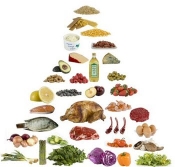
Diet pyramidFood is one of our most basic needs, yet it represents culture, history, and individuality through our choices. Furthering our individuality, each person has medical and gastronomical limitations that add another layer of complexity to how we select what we eat. As such, it is a multilayered issue when you look at the future of food and how we might raise and prepare our food, with perhaps consumption being the only practice set in stone (unless they find a way for us to inhale our food, which doesn't sound very interesting to me).

In this futurepath, we'll look at the history of the human diet, current research on eating practices, and current food issues in order to identify how our food culture might change in the future.

Will social media splinter (us)?

Social media appsMathew Brian Beck offers a look into the future of social media and forecasts new forms of digital tribalism. About this, he says,

"Every platform will be socialized, but every user base will be judged on quality of life, not sheer numbers. Big data will not matter as much as small relationships."

His is an interesting idea about how social media will change our relationships and our choices will reflect our interests and lifestyles. As social creatures, we have circles of relationships in which we are members and which in turn influence our lives.

Protect your DNA

A young John LennonJohn Lennon was gunned down 34 years ago. If still alive, he would be 74 years old. In 2011, one of Lennon's former housekeepers sold one of Lennon's teeth at an auction in England. The winning bid belonged to Dr. Michael Zuk, a Canadian dentist. Zuk is making headlines this week by admitting plans to have Lennon cloned from DNA remaining in the tooth and raising the resulting child as his own. It brings up many questions, including the morality of cloning someone famous and who owns your DNA once you pass on.

Will drugs + devices = superhuman intelligence?

Colorful pillsRaw intelligence is a major factor in our individual level of success - some develop more and some develop less. Whether attempting to maximize your income, research a cure for cancer or win a sporting contest, the ability to take a range of information, internalize it, and turn it into effective decisions can heavily influence whether we encounter failure or success at each task. Human intelligence is the outcome of millions of years of evolution and access to opposable thumbs has provided the ability to make the tools we have used to conquer our world. While there are proposed methods for increasing our intelligence, some individuals are using different technologies and chemicals to increase their own.

A world of living data - Wikipedia on steroids?

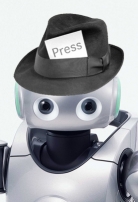
Robot wearing a press hatHumans have issues with data. Data on its own is hard to turn into information, which we can understand much more easily. Weather data is a great example, as it is both a global and local phenomenon impacting almost every day of our lives. If my phone's weather app presented data, I would receive information about regional climates as far as the Arctic and Gulf of Mexico. It would be difficult for most anyone but a meteorologist (amateur or otherwise) to make an accurate prediction using this data.

A Woman Sold for Her Brains and Body

"And this, Mr. Trupp, is our greatest gem."

The attendant led the woman...no, girl this time...by the hand as she had the others. Warren wondered if this 'demo mode' hurt them or if they were even aware of the time passing.

As with the others, the attendant brought her into the room, told her to twirl and sat her on the sofa opposite him. Mr. Lomen reached up to caress her cheek with two fingers. The girl did not flinch or even seem to notice his presence.

New technologies allow us to track everything: should your employer?

Screen capture from the film Modern TimesA short article from Popular Science reports how companies are using new technologies to track employee work habits and lifestyles in order to mold a better employee. Part of the age of new life tracking termed the 'quantified self', they reference three articles on the subject. Here is a list of what is being tracked:

    Sleep
    Distance walked or run
    Diet
    Time spent sitting at their desk
    "Happiness"
    "Performance data" on how well employees communicate with each other and shoppers
    "Tone of voice, movement and even posture when communicating with others"

Pages