Futurepath: human food sources and preparation
 Printer-friendly version
 Food is one of our most basic needs, yet it represents culture, history, and individuality through our choices. Furthering our individuality, each person has medical and gastronomical limitations that add another layer of complexity to how we select what we eat. As such, it is a multilayered issue when you look at the future of food and how we might raise and prepare our food, with perhaps consumption being the only practice set in stone (unless they find a way for us to inhale our food, which doesn't sound very interesting to me).
In this futurepath, we'll look at the history of the human diet, current research on eating practices, and current food issues in order to identify how our food culture might change in the future.
The War on Food
The idea for this topic came from my belief that we (though it's mostly a first world problem where food is plentiful) are constantly questioning our food and food practices. From hearing about the grapefruit diet when I was a teenager to learning about diabetic and heart healthy diets to Atkins to the latest fasting fads, there are a lot of ways we call to question the bounty of food we have available to us. And that doesn't really acknowledge the range of meat, partial meat and non-meat oriented diets around the globe with extreme practices such as veganism, abstaining from eating or using any animal products and limiting themselves to vegetables and fruit.
On a global scale, scientists look for ways to make our agricultural practices more efficient. Sometimes they recommend one species over another (bison over beef) or genetically modify a plant in an effort to provide more nutrition, increase crop production, or decrease the fresh water requirements - or all three.
In the end, the primary goal is to provide plentiful food sources for everyone in the world at affordable prices without damaging the planet (or at least without increased damage to the planet) and while turning a profit. There is also a need to provide a diet capable of supporting the longer healthspans we will need to enjoy those longer lifespans promised in the future, so our food also needs to match with our dietary needs - while reflecting our personal and cultural appetites.
To see where the future might be heading, we should start with our history.
A history of the human diet
According to evolutionists, humans evolved from primates through the family hominidae, which we share with modern chimpanzees, gorillas, and orangutans, until the evolutionary fork birthed the genus homo – of which humans are the only surviving species. The time frame for these events places the development of the great apes at 15 million years, and that of homo at 2.4-3 million years.
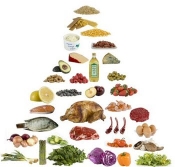
 Our ancestors developed around an omnivorous diet based on local food sources. These sources reflected their habitat as influenced by the seasons and most likely had much in common with modern chimpanzees. The chart at the side shows the structure of that diet, though research on chimp behavior also shows they do hunt at times and eat fresh meat as a result, though only 3% of their diet is meat, much less than that of modern man.
Since we branched to the genus homo, our ancestors have encountered many changes to their diet. Our learning to control fire, dated at 400,000 years ago (though there is evidence humans used fire up to 1.7 million years ago) changed our ancestor’s diet as the ability to cook foods made it possible to eat or digest parts of plants (cellulose and starch) and animals (marrow and internal organs) either previously indigestible or unsafe to eat, and to release more calories per meal. During this time, as both tool development and the use of fire increased, it is believed our diet continued to change to include greater percentages of meat protein from more sophisticated hunting techniques.
The result of more food sources provided for increased populations and also provided the energy for the Great Leap Forward, a theory identifying a major change in human brain development approximately 35,000 to 70,000 years ago as a result of this greater access to nutrition. While we don't know the exact diet, or meat to vegetable to fruit ratio, of our ancestors, we do know their diet remained an omnivorous combination of hunting and gathering until the development of agriculture around 12,000 years ago introduced greater control and consistency over our food sources.
Looking back over the last 15 millions years of our human evolution through pre-humans and early humans, we maintained a relatively static diet for over 14.5 million of those years. Less than 4% of our evolutionary timeframe has included the ability to cook our food and only 0.0008% of that time frame has been influenced by agriculture.
This doesn’t mean our bodies haven’t adapted in that time. 400,000 years has provided an ample number of generations to evolve unique digestive tracts and unique metabolisms from our cousin species. As omnivores, whether subsisting on figs and insects in a jungle or shallow water seafood on the beach, we are adaptable - though we still benefit from nutrients such as dietary fiber, the indigestible part of a plant, to help with efficiency. Yet, even if we don't recognize ourselves in depictions of our ancestors, we should accept our shared metabolic needs and weaknesses.
Why, then, do so many researchers look for reasons to limit our food choices and practices? If we are omnivores at the top of the food chain in every region of the planet, why not eat what we want? To understand that, we should look at the most recent and arguably most influential change to our food system.
The Industrial Revolution and Processed Food
Even if fire or agriculture can be argued to provide the greater impact to how we eat, the Industrial Revolution happened over decades and not millennia or ages. The adoption of industrial methods was nearly instantaneous by comparison. Within a lifespan new practices were changing farming, transportation, and food storage. Chef Cynthia Louise offers a look at how our diet changed at that time, summing up pre-revolution practices as:
Meat and dairy were expensive and rare commodities in pre-industrial Europe. Most livestock was slaughtered in the autumn since grazing areas were scarce in the harsh winters, lending to huge autumn feasts, followed by a bland, meager, almost vegetarian diet through the winter.
While mankind has been processing and preserving limited foodstuffs since the discovery of smoking and salting meat, and continued with the later practices of pickling and fermenting, industrial advancements provided more food and ways to keep it edible for longer durations. Engineering, not something you often connect with your food, has since created a smorgasbord of refined and processed foods. While these advancements helped stave off hunger and malnutrition, even supporting the population boom we've experienced since, we also have the result of low-cost foods high in salt or sugar, devoid of the healthy bacteria and nutrients found in fresh food, and low in fiber.
It’s interesting to note how many of today’s ingredients weren’t easily accessible prior to industrialization. For example:
- High-fructose corn syrup was first produced in 1957 and entered modern use in the 1970's.
- Bleached flour, a process used to age flour more quickly, was introduced around 100 years ago.
- Hydrogenated vegetable oils have only existed for around 65 years (though the process was discovered around 100 years ago).
While experts disagree on whether these ingredients are really to blame for many of today’s health issues, they are part of what makes food affordable (which is good, as people need nutrition and energy) and also unhealthy (HFCS is cheap, which makes it easier to add in quantity, and fructose is believed to be turned into fat more easily than glucose; bleached flour loses much of the nutrition found in whole wheat products; hydrogenated vegetable oils may reduce calories, but have almost none of the vitamins and minerals found in butter) if consumed in quantity.
These replacements, and the other changes from industrialized food production, lead to one of today's common questions: How far can we deviate from our evolutionary needs before we negatively influence our health? The answer to this question requires an understanding of our digestive system, what it needs, and how it fails.
An ancient digestive track In Clean Gut, Alejandro Junger provides a very detailed look at the human digestive tract, including how it functions, how it protects us, and what can happen when it fails. He describes our gut as a system made of human organs and also hundreds of species of beneficial bacteria. The two combine to digest our food, absorb nutrients, and safeguard us from harm. According to his theory, when the gut becomes imbalanced, which can occur from or be exacerbated by the influence of processed foods, some people develop issues such as depression, heart disease, infertility, allergies, and cancer.
Dr. Junger explains how our use of antibiotics can damage the balance of our digestive tract, but then goes on to explain how our modern food supply can also lead to imbalance:
There are other, more insidious antibiotics decimating our intestinal flora. These are found in our food. Some of the same antibiotics doctors prescribe to human patients are administered to livestock by the food industry. These antibiotics will kill your good bacteria as well. Now include the number of antibiotics the food industry adds to any processed food that comes in a box, jar, bag, tube, or bottle. Many chemicals are added to food during processing to kill any bacteria or funguses that would shorten a product's shelf life. The food industry calls them preservatives, but in essence they act as antibiotics. Other chemicals, such as coloring agents and texture, odor, and flavor chemicals, also make it hard for good bacteria to thrive. How else would something edible last for years without decomposing?
While I don’t know enough to agree or disagree with Dr. Junger’s repair process, his description suggests the current shift back to home gardening and localvore food selection to provide more fresh foods may be more than a fad or trend, it may be the result of rediscovering balance in our diet – a balance based on the diet our ancestors ate while evolving the DNA structure that defines our modern human forms.
Change in our diet might not be an issue, as humans are able to adapt in many ways, but moving away from the diet our ancestors evolved to eat can also put a strain on our systems. Let’s look at a few other changes occurring today.
Current Issues
Genetically modified organisms
In our modern age, we have the ability to genetically modify our food sources by changing the DNA code that programs their development. GMO is a very big issue, taken seriously by both sides. On the pro-GMO side, we have scientists working to provide more efficient food sources. This includes DNA modification to activate existing, but dormant, species characteristics or to add new characteristics through genetic manipulation or inserting code from other species.
On the anti-GMO side, we find a growing populace concerned over introducing untested variations to our foods without knowing if these changes will have a negative health impact. Concerns over toxicity, increased allergy response, and a loss of nutrients has called for long-term testing and resulted in the banning of GMO crops in some countries.
Another factor involved with GMOs is the ecological impact. One of the original benefits of GMO was to limit ecosystem damage from increased crop production around the globe, but recent reports of GMO crops killing butterflies and ruining other crop strains through pollen drift are providing evidence of unintended consequences.
GMO isn't limited to plants, there are also concerns over the modification of food animals. While most of these issues involve animal rights, there are concerns over the health implications of eating the animal by-products of a new food source without proper testing.
The path to GMO acceptance will be long and, hopefully, well tested. We already live in a world where glow in the dark rabbits exist along with golden rice, an important and life saving GMO crop designed to introduce more vitamin A into the diet of third world children with the ability to save 1-2 million lives and stop a million cases of blindness per year. A balanced view of GMO crops should identify the benefits to the environment and populations, while also requesting further study at all levels before widespread adoption.
Lab grown meat
Last year, test tube burgers were created from stem cells and have been referred to as "animal-protein cakes." The process could be used to grow meat based on the stem cells of fish, chicken, and lambs, but these early versions had taste testers report the taste needs enhancement as the meat doesn't include fat in its production and lacks that flavor. With the costs of a lab-grown burger at $300,000, it will also be some time until this type of meat comes to market.
3D printed food
New techniques in food production are being adopted by chefs and even companies like Hershey. Printing food offers a new level of control over how food is constructed, introducing new flavors, textures, and practices. This technology could also allow the production of food in places where food preparation is a difficult task, such as in space.
The Future of our Food
Food is part of our culture and life, and hard to change in the short term unless forced by circumstances beyond our control such as limitations due to health or famine. Whether comfort food or holiday dishes or your favorite menu item at any restaurant, the combination of scent, flavor, fat and carbohydrates is a siren to our taste buds. Yet research shows too much sugar can lead to obesity, too much sodium can lead to high blood pressure, too much cholesterol contributes to stroke, and so on. Eating a balanced diet designed for our needs, based on our preferences, sensitivities, activity requirements, and age would be wonderful and probably life-extending and life-enhancing. The issue is most humans don't track their diet and, when they do, struggle to identify portions and the full range of ingredients if eating in restaurants or making from scratch. Tracking your diet takes time, effort and skill, though some technologies are already trying to help and should become more exact in the future.
What happens if all of these trends come together? How might we combine a healthy balance of protein, carbohydrates and fats while keeping the flavor and textures we love today? Food scientists are working to pull both together and an example is the German company Biozoon working on a 3D printed food extruder designed to make food that melts in your mouth to benefit individuals suffering from dysphagia - the inability to swallow when the larynx loses the ability to close properly. These printers combine flavor and texture materials designed to reproduce foods that look and taste and feel like the real thing.
 | 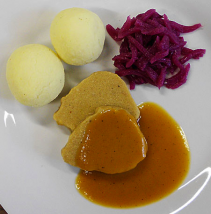 |
Meals prepared using Biozoon's 3D printing method
With enough development, I believe 3D food printers will be able to create amazing foodstuffs we'll drool over just as much as fresh baked bread and that lab-grown meat could offer a serving of protein identical in taste, smell, and texture to Wagyu or Kobe beef. They won't be those things, not exactly, but close enough we can dine as we like and the components may be more nutritious and diet-balanced than what we have today. Not that our entire food supply should be replicated via printing as you can't get more processed than rendering foods down to glops and printing them together, but adaptable and user-focused 3D food preparation techniques could turn our junk food into something healthier while retaining the characteristics of our modern cuisine. Coupled with fresh food, and hopefully more of it as current trends of home gardens and localvore practices expand, we might find the ability to balance our diet without noticing we've done so.
Besides, no matter how many food science breakthroughs we discover, research shows fruits and vegetables are more beneficial to fight cancer rate and extend life than modern pharmaceuticals. At the end of the day, we are what we eat and we may benefit greatly from eating based on what we are. If so, the future of our food is finding tasty, safe, and ecological ways to enjoy modern food balanced for the diet of our ancestors and preparing it in dishes and products our modern tastebuds find satisfying. With enough flexibility, we can have the best of both worlds in the future.
Bonus: Futureview
While working on this article, I began imagining how a mixture of pre-made, fresh and printed food might mix if my research comes together the way I believe it might. The result is Fresh Handmade and Printed.
 Interested in the social impact of our future advancements, Daryl developed and built Regarding Tomorrow as a platform to share and discuss our collective hopes and fears of the future. Daryl's background is in education, including graduate studies in special needs and a masters in instructional technology from UVA's Curry School of Education. He has worked as a high school teacher and has over 10 years of university experience in the US and Canada.