No explicit material

Do We Need Humans?

Robot workerThere is a lot of speculation on the technological singularity - the point at which artificial intelligence has progressed beyond human intelligence. Between AI and advanced engineering, humans could quickly become extraneous to modern society, especially from the viewpoint of those who own the robots and see extra humans as needful beings who return little to the planet.

That's a very dystopian view, but a possible outcome all the same. The February 28, 2014 episode of NPR's Ted Radio Hour offers four viewpoints on the future of humanity.

Train your Robot Well - This Week in Law

Our Final Invention book cover#255 of This Week in Law's weekly discussion focuses on the various issues we may face when regulating robots in the future. The discussion revolves around James Barrat's book Our Final Invention: Artificial Intelligence and the End of the Human Era.  Based on Barrat's writings, they discuss how a super intelligence might come to view its human 'captors' - humans that used to be the smartest creatures on the planet and now occupy a lower rung of intelligence as we are surpassed by our creation.

Topics include building sympathy into machines to instill ethics, robotic personhood, and a range of issues we might encounter after the Singularity occurs. The discussion of robotics lasts around an hour and is a very deep discussion.

Available as a video or audio download.

Robot concept art from Elysium by WETA concept artist Aaron Beck

Robot head from Aaron Beck's concept art for ElysiumWETA artist Aaron Beck has worked on Avatar and District 9. If you're looking for interesting artwork to stoke your imagination, he has a blog post including dozens of his concept art images for Elysium including 20 robots, 9 synthetic organisms, and a dozen weapons, along with cars, characters and fight scenes.

The Hyperloop is down...speculative fiction by Crave's Eric Mack

Eric Mack, from CNET's Crave, wrote a two piece story using today's news to speculate on what the futre might look like a decade or two from now. Worth a few minutes read to see what he thinks about a few things. Especially with humor like this:

With all my high-speed transport options out of commission for the day, I should be posting my own angry EEG GIF showing my brainwaves mashed up with some vintage footage from an old Dwayne Johnston flick, back before he was elected, before his groundbreaking presidency united the American and Canadian states (largely to allow for American drone fleets to better protect Arctic borders from polar pirates) and led to the annexation of Mexico, back when -- for some reason -- everyone simply called him "The Rock."

Part 1: The Hyperloop is down and I'm late for work
and part 2: Smart wig on and lightsaber packed, I visit the future.

Enjoy.

Surrogates (Graphic novel and 2009 film)

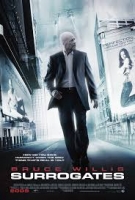
Cover of Surrogates graphic novel  Surrogates movie poster The Surrogates is a 2005 comic series that explored a future society where humans control robots from the comfort and safety of their own homes. These robots provide what appears to be perfect telepresence by connecting the owners to the outside world - without risk to their physical bodies.

The series was made into a motion picture in 2009, titled Surrogates, with a slightly altered storyline in which humans can be killed through through the Surrogate interface. In both works, investigators (police in the graphic novels and FBI agents in the film) attempt to solve a series of crimes involving attacks on surrogates, with the investigation taking them deep into societal issues between a modern world and a militant group who refuses to interact with surrogates.

They are both engaging stories exploring extreme telepresence and the positives and negatives that come with the technology. The graphic novels are thoughtful and very well written with a lot of believability. The film is science fiction as an action film, though Surrogates takes time to explore additional elements not included in the graphic novels, adding to the plot and in the background of the main storyline. It's an intelligent movie behind the gunshots and car chases.

Gamma

Factory Fifteen makes visually stunning short films and 'Gamma' is no exception. The story is set after nuclear wars have left some cities irradiated husks. Gamma is a product designed to clean the cities and make them habitable again. An artificial lifeform made from fungi and molluscs, the Gamma spores are seeded via floating ships and promise to make the cities safe within months. Sadly, this doesn't happen and we hear the narrator tell the tale of his home's fate.

Six and a half minutes long, 'Gamma' is worth a quick watch. It touches on issues surrounding modified life and what happens when they don't live up to the hype.

Abundance: The Future Is Better Than You Think

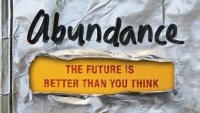
Book coverIn Abundance, Peter Diamandis and Steven Kotler present trends taking us towards a better future - one in which individual needs are met on a global scale. Using Maslow's Hierarchy of Needs as a foundation, they explore technology will find ways to improve efficiency by fostering cooperation, providing access to clean water, producing enough food for a planet of nine billion, and even enabling equality as limitations dissipate.

Many projections offer a future half empty. Here, we get a lesson on how our biases enable close tracking of negative trends, whether serious, global issues or personal issues threatening a comfortable ideal we would not wish to give up. Yet, data show the world is improving. As an example, Bill Gates' annual letter from this past January presents how effective support of poor economies is stabilizing population, improving health, and helping develop economies capable of supporting human rights and freedom.

The point of Abundance is that we can both thrive as a race, free of draconian measures to tame our needs, and solve our problems going forward, using new methods and technologies to empower humanity. Why settle for half empty or half full, when the future can be filled to the brim?

Social Physics

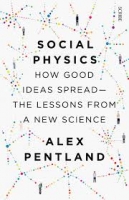
Social Physics book coverAccording to Wikipedia, Alex Pentland's areas of research include social physics, big data, and privacy. In his book, Social Physics, Pentland takes us through the benefits and issues, such as the loss of privacy, that come from comprehensive tracking. It's a short book with a deep look at how the Internet of Things and the quantified self will collect data to change the world around us and better our lives.

Focused on human behavior, the book offers a look at the range of benefits that could result from our hyperconnected world. These include idea flow to spread and advance new ideas, methods for bringing people into problem-solving scenarios to fast prototype solutions, and ways cities can take the density of its members, services, and infrastructure together to improve efficiency while providing the best living experience for the humans who call it home. At its heart, the work focuses on ways we can use data to find better methods for improving how we work together, but it also hints at the promise of an abundant future where mountains of data provide true insight to the best ways we can work together.

While that sounds promising, Pentland doesn't look at the world through rose colored glasses, but acknowledges how this data can and will impact our privacy. So he also proposes simple laws designed to allow the collection of data while protecting citizens from its inappropriate use (at least without our permission).

Social Physics is a course in a book by one of, if not THE expert in this field. Pentland offers a thorough and digestible look at the field and what it offers our future.
Robocop (2014)

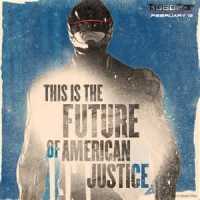
Robocop posterA future of robots replacing military and police personnel is just a matter of time. The new Robocop, a remake of the 1987 cult classic, bases the need for a cyborg police officer after mass refusal of robotic policing of US citizenry. To put a human face on the next age of police service, detective Alex Murphy is used to operate a new body that makes him a cyborg supercop and his success will provide acceptance for OmniCorp to begin selling robots to police all over America.

As part of the Robocop system Alex influences, but doesn't always control, the police software or the body it operates. The film explores his posthumanity and the line where the human ends and the robot begins - or the other way around. Seen as the Future of American Justice, Alex/Robocop works through issues at a personal level while acting as the star of the Detroit police department and a pawn of OmniCorp's need for new contracts.

I, Robot (2004)

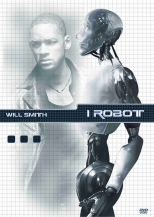
I Robot movie posterBased on the Asimov short story collection of the same name, I, Robot explores a society where humanoid robots are everywhere, doing a range of jobs, through a detective who is distrustful of robots due to a tragic accident he survived, but others didn't. As a result, when a murder happens and a robot could be responsible, the detective has to overcome doubt that a robot, required to follow the Three Laws of Robotics, could kill a human.

Another action science fiction film based on Asimov's work, the film is set in a future with many many societal changes, yet still feels incomplete. The movie is almost too clean, another clean utopia containing devoid of nature (except the cat, gotta save the cat). Yet the benefit of that sanitized environment is the way the crime stands out. Everything looks so clean and feels so efficient, you have to wonder whether any crime happens at all. For that reason, the CGI worldbuilding works for the film, though I have to wonder if a future remake with grittier writing and scenes might offer a more believable setting.

Pages