No explicit material

The Escape

Bring Back Our GirlsAbeo heard and felt her phone signaling. Not the ringing of a call or vibration of an update, but the signal of alarm. Around her, the other girls in her school pulled out their phones to read the same message. The conversations of the cafeteria grew raucous, as if quiet was really possible in a school at lunch, and teachers began to usher everyone towards the parking lot.

Buses were being started outside, starters cranking antiquated engines to life. While some technologies had made it to their corner of the world, gas and diesel engines remained the norm for at least a bit longer. Electricity was now everywhere with solar panels costing very little for a day's energy, but vehicles with batteries went to regions with more money to pay for them.

Overhead, small flocks of drones buzzed to the sky taking a quick reconnaissance of everything that moved - even in their part of Africa, nearly anything that moved was tracked in some way. Abeo climbed into the front seat and waited while the bus filled with her peers. She pulled up the pages linked from the warning and, reading between the lines of governmental jargon, discovered that suspected terrorists were blitzing their small city.

The Machine - 2013 film

The Machine

A true sci-fi thriller, The Machine presents a future where artificial intelligence is closing in on human-level capabilities and governments race to develop human-like robotic soldiers. After a cold war with China has caused a severe economic depression in the West, research into artificial intelligence is viewed as THE research to win what is considered an unavoidable war. The desired outcome is a superior soldier capable of managing a "three-block war: the battle, the negotiations, and the peace."

While too many recent science fiction films have focused on famous actors and fast scenes, adding layers of action to cross genres, The Machine is a true sci-fi film (there is action, but most of the movie is slow and moody as developments take time). Both dark and gritty, it feels like a better view of the future than the ultra-political Elysium or any film dealing with human-alien strife. Swinging for the fence, Caradog James, writer and director of The Machine, bangs one out of the park.

Can technology help dementia sufferers maintain independence?

Elderly woman with hands over faceWhile medicine looks for both the cause and cure of dementia, millions of elderly around the world begin feeling the symptoms every year. New technologies, some existing now and some maturing towards consumer products, offer not only real-time information, they also include ways to inject this information into human interaction with their surroundings. Visual overlays in Google Glass, context aware assistive services such as Google Now, and our ever-present GPS location awareness can combine to provide supportive interactions with our world.

While these advancements are being developed for mass consumer adoption, they can also provide support for individuals who live with limitations such as dementia. I've been working on some ideas on how our elderly might use these devices, struggling to get traction beyond what is easily described and would be used by individuals, whether healthy or dealing with dementia. Then I recently heard about VocalID, a group collecting a range of human voices for the use of those without a voice of their own. In the past, individuals unable to speak were limited to a very small set of digital voices - most of them identical to the voice used by Stephen Hawking. To provide semi-unique voices, Dr Rupal Patel founded the Communication Analysis and Design Laboratory (CadLab) and the VocalID organization - the latter which collects 2-3 hours of donor voices to provide options for individuals suffering from severe speech impairment.

The Silent Intelligence: The Internet of Things

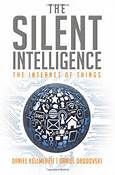
The Silent Intelligence book coverThe term "Internet of Things" is thrown around a lot, even used in parallel with other terms describing the same thing for a specific area of focus. Even after reading a range of articles over the last few years, I felt my understanding remained a bit vague and decided to look for a resource with depth and breadth. Kellermeit and Obodovski's The Silent Intelligence: The Internet of Things comes highly rated on Amazon (4.5 stars) and seemed more informational than application-oriented books such as McEwen and Cassimally's Designing the Internet of Things, or Robert Scoble and Shel Israel's Age of Context: Mobile, Sensors, Data and the Future of Privacy - which I plan to read as well.

Using genetic modification to protect ourselves from dangerous species

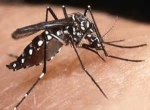
Aedes aegypti mosquitoOur ancestors consistently looked for ways to eradicate apex predators who were a danger to their tribes by directly hunting humans and also by competing for our food sources. Today, many species of apex predators exist in controlled numbers in places we enjoy them, but rarely come into direct contact with them. To make our world safer, we've done almost too good a job as various species move closer to extinction with every successful poaching.

Filtering falsehood in the future

Liar card from eCardsThis past week, Facebook launched the FB Newswire, "...a resource for journalists that aggregates newsworthy social content shared publicly on Facebook by individuals and organizations." The service offers some hope that information shared through social media can become a bit more trustworthy, helping to clean up some of the misinformation and lies easily shared in an age where every person with a data line can publish content with very few restrictions.

It's an important development when the largest network in history adds a feature with this much potential impact. One of the reasons we value social media is the ability to get updates as soon as content is posted. Facebook provides sharing among acquaintances, friends, and family members while Twitter provides a near endless churn of news from any and every account and hashtag you follow. If news happens, whether the news is personal or global, we can know about it within hours, minutes, and even seconds of its posting. Sadly, the strength of social media is also a weakness when misinformation or outright lies are shared at the same speed. As Winston Churchill said...

A lie gets halfway around the world before the truth has a chance to get its pants on.

Futurepath: human food sources and preparation

Diet pyramidFood is one of our most basic needs, yet it represents culture, history, and individuality through our choices. Furthering our individuality, each person has medical and gastronomical limitations that add another layer of complexity to how we select what we eat. As such, it is a multilayered issue when you look at the future of food and how we might raise and prepare our food, with perhaps consumption being the only practice set in stone (unless they find a way for us to inhale our food, which doesn't sound very interesting to me).

In this futurepath, we'll look at the history of the human diet, current research on eating practices, and current food issues in order to identify how our food culture might change in the future.

Fresh, Handmade, and Printed

A burritoGabe set her tortilla on the printer bed and shut the door. Ready to build the burrito, several systems came online at once. The printer began to heat the tortilla while printing the artificial chicken from proteins and dehydrated chicken broth directly on the bread. Another system prepared the rice, force hydrating each kernel with a mixture designed to taste like cilantro and lime. The kidney beans were printed around the chicken once those protein pieces were completed and warming. The guacamole was a special selection, frozen in small dots and extruded through a tube from the freezer. The cheese, given Jenn's issues with dairy, was printed from a non-dairy material.

Will social media splinter (us)?

Social media appsMathew Brian Beck offers a look into the future of social media and forecasts new forms of digital tribalism. About this, he says,

"Every platform will be socialized, but every user base will be judged on quality of life, not sheer numbers. Big data will not matter as much as small relationships."

His is an interesting idea about how social media will change our relationships and our choices will reflect our interests and lifestyles. As social creatures, we have circles of relationships in which we are members and which in turn influence our lives.

Pages