Tracking behavior: corporate control or assigning responsibility where it belongs?
 Printer-friendly version
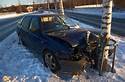 As greater details of our lives can be tracked, data analysis can show trends in our behavior against the norm. When I view personal privacy, I ask three things:
- Why does someone need to know my preferences and tendencies?
- Can this data positively impact myself or my family?
- Can this data negatively impact myself or my family?
Obviously, there are more details to consider, but these broad questions are a good start. Whether we use a social site such as Facebook, online productivity apps such as Google Docs and Gmail, or even buy a cell phone which companies can use to identify our daily travel, we are giving up massive quantities of data about ourselves. While our shopping and restaurant preferences probably won't hurt us, visits to sex toy shops could be embarrassing and trips to a drug dealer could provide evidence how often we broke the law.
Stacey Higginbotham at GigaOM interviewed Progressive Insurance's chairman Glenn Renwick about the future of car insurance, an industry looking for ways to collect as much data about the insured as they are allowed. Automobile insurance is a great example of an industry capable of changing our behavior - something we might not find reassuring.
When asked about the Progressive tracking devices used to collect data for research, his quote about the value of this data was:
“We’re moving away from correlation to causation.”
Currently, when I purchase car insurance, they are interested in a few items about me: gender, age, zip code, commute, prior driving convictions, and type of automobile I'll be driving, including age, size of engine and size of the vehicle. There may be others, such as income and career (some insurers rebate teachers as they are considered to be careful drivers) depending on the insurer and the person requesting a rate.
Using this data, insurers can either assign me into a bucket of driving risk or assign a value to each detail and use an algorithm to identify my rate. This isn't limited to car insurers, but details such as these can impact life insurance rates, loan rates, and lines of credit. The limits to what a business can include is often set by the laws of the nation, state or province in which they operate (or a combination of those).
By collecting data about our actual driving habits, insurers could identify what types of risks we take and charge us based upon how regular those events occur. The answer to question one, then, is the insurance companies want to know our habits to better assess our driving risks.
I'm a fairly safe driver compared to those around me. I don't speed, I don't switch multiple lanes without a signal and I don't tailgate. I'm sure I'm not perfect, but with a toddler, I tend to take few risks at any time - my daughter doesn't deserve to grow up brain damaged or with scarring due to my driving and being safe means I can try to avoid bad drivers as well. So the answer to question two is: it should benefit me, as I am both a safe and defensive driver.
Those two seem to line up fairly well. Insurance companies can take my data, I can pay less and drivers who act like this guy:
They can be charged so much they either learn better habits (and get some counseling) or not drive. Again, this helps me as people like this aren't allowed in my risk bucket. Also, keeping them off the road decreases the risk to myself and my child.
What about question #3? Can this data have a negative impact on me if I am a careful driver? Of course, though the range of impact isn't known. The "law of unintended consequences" says we might not be able to know those issues until they are already having a negative impact.
Here's an example: Someone I know told me about a trip to the VW dealership requiring their car be hooked up for analysis. The technician said, "You revved it past the red line this many times." He knew he had, on occasion, missed the gear change, but wasn't aware those events were tracked. While they didn't void his warranty, such events could be used to void if the buyer is notified before purchase.
Something as simple as missing a gear while juggling your phone could cost you thousands of dollars based on the data collected from a system you might not know existed and, if you were aware of the black box, might not know it collected those events. The unintended consequence might be a an attempt to protect the company from individuals using cars for racing, but costing a driver that isn't very good with as stick years of warranty coverage.
I have no answers, but I found the article an interesting starting point. If you're interested in the subject, here are a few more article explaining the concerns over black boxes.
LA Times - Car black boxes: Privacy nightmare or a safety measure?
- Positive: "If we had these event data recorders, we would have picked up on child deaths from air bags much sooner," said Clarence Ditlow, executive director of the Center for Auto Safety.
- Negative: The friend you loaned your BMW to decides to create his own ultimate driving experience, and your insurance rises because of his 120 mph freeway jaunt.
Electronic Frontier Foundation - Pay As You Drive “Black Boxes” Threaten Driver Privacy
- "There is real danger that this information would not only be used to ascertain the political or associational affiliations of drivers, but also to charge more if you drive and park in neighborhoods with high vehicle theft and crime rates, to impose higher premiums for people who drive at night or to link your health insurance rates with location data that reveals your lunchtime trips to McDonald's."
American Civil Liberties Union - A Look at the Issues Raised by 'Black Boxes' in Cars
---------
Where do you stand - would you give up your auto data in return for insurance rebates and safer roads? Do you believe they didn't need this data a decade ago and shouldn't have access to this data today? These are important questions to ask ourselves as it will be our governments which will allow collection and limit use in the future.
 Interested in the social impact of our future advancements, Daryl developed and built Regarding Tomorrow as a platform to share and discuss our collective hopes and fears of the future. Daryl's background is in education, including graduate studies in special needs and a masters in instructional technology from UVA's Curry School of Education. He has worked as a high school teacher and has over 10 years of university experience in the US and Canada.