Asimov's 50 year predictions - and how our present influences our future views
 Printer-friendly version
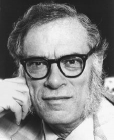 In 1964, Isaac Asimov made 10 predictions looking forward 50 years. In 2014, the year he was predicting, Eric Mack reviews the list on CNET. While the list is interesting, I find the view of the events influencing Asimov's prediction more engaging. Asimov, born in 1920 (or perhaps 1919, he was never certain of his actual birthdate), grew to maturity through the Great Depression and then watched World War II unfold across the globe, ending with the saturation bombing of Germany and the atomic bombings of Hiroshima and Nagasaki. His generation had watched America (his family emigrated from Russia to the U.S. when he was a toddler) grow from a nation of farmers to a world superpower capable of landing probes on the moon and putting men into space.
As Mack points out, the 25 years preceding these predictions (1939-1964) were a time of great change. Looking back on our last 25 years, from 1989 to 2014, there has been a great amount of change as well.
- The fall of the Eastern Bloc communist states.
- The rise of China, fast becoming the worlds largest superpower, not only based on population, but also on economy. A country often identified in the media as the next world villain.
- Data showing how our population, agriculture, energy production/use and waste products are influencing global patterns including ecological destruction and weather patterns.
- It was in 1989 that Tim Berners-Lee came up with the idea of the World Wide Web and the first text message was sent, two technologies which have transformed modern day communications and information access.
- We've watched warfare continue to shift from traditional battlefield tactics towards asymmetrical warfare and the psychological tactics used by terrorists (and some legitimate armies).
- How these last two points have combined to create a world where governments previously built on freedom (and some that aren't) are using the global war on terror and current technologies to track the movement and communications of their citizens.
And these are just a short list of broad events over the last 25 years. Looking at them, they certainly influence my hopes and dreams - especially my hopes and dreams for my daughter's generation. As I continue to develop my opinions of the future, I'll need to step outside of these events - issues which have severely impacted my political, cultural and generational views of today.
What events do you believe most influence your views of the future?
 Interested in the social impact of our future advancements, Daryl developed and built Regarding Tomorrow as a platform to share and discuss our collective hopes and fears of the future. Daryl's background is in education, including graduate studies in special needs and a masters in instructional technology from UVA's Curry School of Education. He has worked as a high school teacher and has over 10 years of university experience in the US and Canada.