Blade Runner (1982)
 Printer-friendly version
- No explicit material
Director:
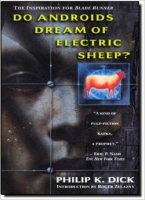
 Considered one of cinema's most influential science fiction films, the Blade Runner screenplay was based on Philip K. Dick's novel Do Androids Dream of Electric Sheep? and directed by Ridley Scott, who also directed sci fi classics Alien and Prometheus. Blade Runner is set in our near future (2019 is only 5 years away), against a dystopian backdrop of a filthy, crowded cityscape on an Earth where most humans appear to have left for other colonies. As with most classics that visualized technological and ecological hell on the other side of the year 2000, the vision is not accurate. Yet, it navigates issues we are discussing today because they will be here tomorrow.
While Harrison Ford's Deckard is the film's protagonist, forced from retirement to reclaim his police role as the eponymous Blade Runner, the more engaging story elements revolve around the 'replicants.' Replicants are human-like androids used in dangerous, off-world roles and banned from Earth. When replicants come to Earth, it is the job of Blade Runners to identify and 'retire' (destroy) them.
Five replicants appear in the film, four which have returned to Earth to find a way to extend their short life spans and a fifth model working for the Tyrell Corporation. The four androids' motive is survival, a very 'human' or even mammalian need, though they show many signs of sociopathic or psychopathic mental issues - if they were human. Combined with superhuman physical capabilities, the replicants are capable predators when they turn on humanity.
Why should you watch it?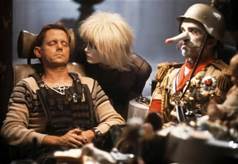 In both 1968 (when Dick's novel was published) and 1982, androids were far-future ideas. Even bleeding edge technologies were insufficient to build such a device. In 2014, resources supporting the development of human-like robotics and the artificial intelligences to control them are growing as their own fields and not side application of current architecture and software. As these fields continue to merge, we inch closer to synthetic or technological life.
Finding ourselves within a decade or two of crossing the uncanny valley to create lifelike robotics, Blade Runner presents issues we need to consider today. Is it ethical to create sentient life and ban it from our planet? Are artifically limited lifespans appropriate? If the answer is 'no' to both of these, should we even allow this creation?
Human rights are another issue. How many, if any, rights should be assigned to artificial life? They appear human and seem to possess emotion, including anger and sadness. They feel pain. They have memories of their younger life and they dream. How human does a construct need to be to earn equal rights?
Which brings us to the 'retirement' of androids. Deckard shoots to kill and never attempts to make an arrest. The right to a fair trial is considered "an essential right in all countries respecting the rule of law." On the flip side, if Deckard is an android, does he have "the right to refuse to kill?" Both of these rights have been identified as central to every human's needs. Will we offer those same rights to artificial life? Or will we view it as something we own, "life" we can use as a whipping boy or as an assassin's hand to keep our's clean?
Chances are most of you have seen the film, perhaps many times. It's worth another viewing to consider issues we or our children will face in our lifetimes.
Topics covered
Futurists will enjoy the topics explored in the movie, including:
- Artificial life
- Questions about morality in artificial intelligence
- Relationships between artificial constructs
- Death sentences for artificial life (no trials)
- Engineering sentience with limited lifespans
- A world setting devoid of natural life
Backlinks:
Your overall rating:
Quality of the work (writing, art, photography, etc):
How believable?:
How original?:
Story tags (elements of how we live):
Location of story:
Years into the future:
 Interested in the social impact of our future advancements, Daryl developed and built Regarding Tomorrow as a platform to share and discuss our collective hopes and fears of the future. Daryl's background is in education, including graduate studies in special needs and a masters in instructional technology from UVA's Curry School of Education. He has worked as a high school teacher and has over 10 years of university experience in the US and Canada.