Using cybernetics to synthesize biology and create an "Internet of Living Things"
 Printer-friendly version
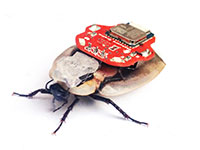 In an article on Huffington Post, Professor Lee Cronin offers some insight and asks some interesting questions about the future of cybernetic biology. He specifically focuses on developing an ability to control bacteria and plants in order to create a networkable ecosystem we could use to benefit society. (For more information on the Gage and Marzullo research mentioned in his article, please check out our article on their work.)
He also asks for ways this type of technology could be misused. It's a brief, but compelling piece pointing out the benefits, concerns and even the issues of avoiding such research. Certainly worth reading to get some insight into an expert's view of this future and some of his points about how starting the conversation ahead of actual developments can benefit researchers to increase safety before it arrives.
Now, Dr. Cronin did ask for thoughts, so I'll offer a few of mine as a thought exercise if nothing more.
- Bacteria are important parts of our food chains, both as a food source and the life responsible for cleaning up our environment. Given how human involvement has weighed so heavily against flora and fauna at other levels of ecosystems we've penetrated, how safe should we feel controlling so much of the biomass?
- How could this be used to punish individuals? Frightening to envision a future where a foreign nation, oppressive government or hacker can run a script that communicates orders to your farm or home environment and the bacteria change their efficiency or begin to ingest materials you rely on as a punishment.
- Assuming the connection is global and such a technology could be controlled from anywhere on (or even off) the planet, who owns the controls? I can imagine a future where corporations have a remote switch and turn off someone's livelihood for non-payment. It smacks of how lenders can now disable someone's vehicle with an app or Chicago shutting off water services to those behind on payments. What sort of leverage would this provide over someone's home environment?
- How could this impact privacy? What could networked bacteria provide? Drugs, bodily fluids, chemicals - maybe excellent for tracking bomb making substances, but could the resulting data also provide improper insights into someone's legal personal choices?
- Finally, how would these controllers impact our environment? If we're putting a small chip (no matter how small, I assume the numbers would be in the trillions) of some form in each or at least a decent percentage of local bacteria, what are the long range implications? There may be new research, but I recall a discovery that single cell organisms would attempt to digest nanoparticles and fail, but then many would stop eating and die off.
I'm going to assume most of these would be avoidable or at least offer a minimal risk against the range of benefits bacterial control could offer. For example, by the time we reach this capability, the chips will likely be made of biodegradable and digestible materials that wouldn't pose harm to life at that scale or build up in the environment to directly threaten life at a larger scale.
Negatives out of the way, this is exactly the type of research that makes me wish I'd leaned more heavily towards the hard sciences. The promises of using bacteria to clean up pollutants such as chemical spills and those found in landfills are amazing. But the idea of tracking new viruses provides a glimpse at the data we could glean from the wild. If being able to track bacteria would allow tracking of entire ecosystems, consider what we could learn about all life on our planet. That, I think, is the reward that would be worth the risk.
Cybernetic Synthetic Biology And The Internet of Living Things via Huffington Post
 Interested in the social impact of our future advancements, Daryl developed and built Regarding Tomorrow as a platform to share and discuss our collective hopes and fears of the future. Daryl's background is in education, including graduate studies in special needs and a masters in instructional technology from UVA's Curry School of Education. He has worked as a high school teacher and has over 10 years of university experience in the US and Canada.