Flora and Fauna (living nature)

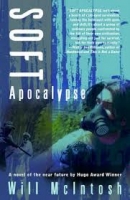
Soft Apocalypse

Soft Apocalypse book coverAs atmospheric carbon rises towards 450 units per million and the pitch of climatologists reach higher levels of alarm, Soft Apocalypse offers a worst-case scenario of what a slow collapse of society might look like from the inside. Where McIntosh's Bridesicle/Love Minus 80 revolved around a misuse of life-saving technology, Soft Apocalypse is an avalanche of Hell unleashed on our planet. It is futurehorror without a Freddy or Michael, where the bad guys numbered in billions around the globe. Many of them bad guys who live among us today, but who haven't been forced to show their true natures as long as the distractions of civilization keep them in check.

This story could easily be the world outside as everything unraveled in Cormac McCarthy's The Road. Watching the slow collapse of society through Jasper's narrative, we see humanity returning to its fierce roots as the veneer of civilization is slowly stripped away. Soft Apocalypse is a message you live through as you read it.

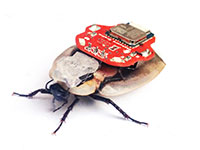
Using cybernetics to synthesize biology and create an "Internet of Living Things"

Robot roach In an article on Huffington Post, Professor Lee Cronin offers some insight and asks some interesting questions about the future of cybernetic biology. He specifically focuses on developing an ability to control bacteria and plants in order to create a networkable ecosystem we could use to benefit society.

He also asks for ways such a technology could be misused. It's a brief, but compelling piece pointing out the benefits, concerns and even the issues of avoiding such research. Certainly worth reading to get some insight into an expert's view of this future and some of his points about how starting the conversation ahead of the ability can benefit researchers to increase technology safety before it arrives.

For more information on Gage and Marzullo's research, check out our article on their work.

Cybernetic Synthetic Biology And The Internet of Living Things via Huffington Post

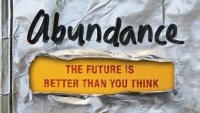
Abundance: The Future Is Better Than You Think

Book coverIn Abundance, Peter Diamandis and Steven Kotler present trends taking us towards a better future - one in which individual needs are met on a global scale. Using Maslow's Hierarchy of Needs as a foundation, they explore technology will find ways to improve efficiency by fostering cooperation, providing access to clean water, producing enough food for a planet of nine billion, and even enabling equality as limitations dissipate.

Many projections offer a future half empty. Here, we get a lesson on how our biases enable close tracking of negative trends, whether serious, global issues or personal issues threatening a comfortable ideal we would not wish to give up. Yet, data show the world is improving. As an example, Bill Gates' annual letter from this past January presents how effective support of poor economies is stabilizing population, improving health, and helping develop economies capable of supporting human rights and freedom.

The point of Abundance is that we can both thrive as a race, free of draconian measures to tame our needs, and solve our problems going forward, using new methods and technologies to empower humanity. Why settle for half empty or half full, when the future can be filled to the brim?
Rise of the Planet of the Apes (2011)

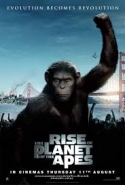
Rise of the Planet of the Apes posterThe original "Planet of the Apes" introduced us to a world where humans are secondary to our closest family species in the great apes. The film relaunch of "Planet of the Apes" set those events in our future. "Rise of the Planet of the Apes" explains why these species are uplifted to human-level intelligence and the resulting conflict when humans attempt to deal with "alien" emotions, attitudes, and actions.

The film focuses on the development of an uplifted chimpanzee named Caeser, who gains human-level (or greater) intelligence as a result of the pharmaceutical testing of a potential Alzheimer's cure on his pregnant mother. Raised by the scientist who developed the cure, the film presents Caeser's life from a newborn to his role as a leader of a group of uplifted animals.

Ventus

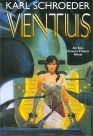
Ventus book coverVentus is one of those scifi novels that strikes a great balance between plot, characters and new technologies - and a few old ones. One of my favorites and it's free on his website (or you can donate something for a novel that offers both education and entertainment with 4 stars on Amazon and 4.6 on Manybooks) if you're looking for something to occupy your weekend until winter finally sails away.

Is this accurate of our past and, if so, should it define our future?

Man on trash mountainMan by Steve Cutts is a visceral animation depicting the history of mankind...ahem...bleeding into a possible view of our future. He focuses on our destructive nature, highlighting choices we've made some find cruel and wasteful and leading towards a demise by...well, you can see the ending yourself. Just 3:35 and worth the time.

What happens if data disproves your viewpoint?

Data.gov iconEven as an (very) amateur futurist (you have to start somewhere), you run across information that challenges perceptions - both your own and those you see every day. One of the biggest lessons I've learned through my research/writing is that any lack of objectivity skews your viewpoints on the future. I can and should include my beliefs, values and desires, but too much subjectivity and any forecasts are little more than daydreams or nightmares.

On course to collapse or a future of abundance?

Deserted farmNews this week from a NASA sponsored study on the possibility of civilization collapse and how it might happen. The study was led by applied mathematician Safa Motesharrei and looked at five factors leading to historical collapses of past civilizations such as the Roman empire: population, climate, water, agriculture, and energy.

2030: A Day in the Life of Tomorrow's Kids

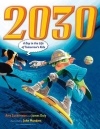
2030 book coverSo much energy goes into the future, both preparing for it and finding ways to retail it, but there aren't many good resources for the kids who will inherit it. 2030: A Day in the Life of Tomorrow's Kids is just that - a resource to help today's kids understand a bit of what their future might hold.

It's a nice resource and at only 30 pages long, it manages to cover a wide range of material, including clothing, communications, living space, careers, our populations, housing developments, transportation, recreation and education. The final page includes a nice list of books, reports and websites the reader can access for additional information.

Pages