Commerce (trade)

An Hour with Will McIntosh

http://www.amazon.com/gp/product/159780276X/ref=as_li_tl?ie=UTF8&camp=1789&creative=390957&creativeASIN=159780276X&linkCode=as2&tag=regardtomor07-20&linkId=HTYCIYXBI2SHEYDAIf you aren't familiar with Will McIntosh, he isn't surprised.  Like many authors, Will is happy just to have a writing career and thankful for the opportunities his readers provide, even if his name isn't well known. But given the quality of his previous work and a new young adult science fiction series in development (The first novel, Burning Midnight, is scheduled for 2016), don't be surprised if you start hearing his name more often.

But you should know his short story "Bridesicle" won the Hugo Award for Best Short Story and also the Asimov's Reader Poll in 2010. It was also a finalist for the Nebula Award for Best Short Story that same year. His short version of "Soft Apocalypse" was a finalist in 2005 for both the British Science Fiction and British Fantasy Awards.

Timebanks on The Future of Money Podcast

On the Future of Money Podcast, Heather Schlegel interviews Autumn Rooney, the founder of the Echo Park Time Bank. While I've heard of time swapping, time banks themselves are a new concept. In 42 minutes, they cover several interesting points on the topic, including:

  • @3:50 - How is the future changing? Ms. Rooney points out today's unsustainable methods and how they are bringing about tomorrow's changes.
  • @4:55 - An explanation of time banks and how time values are traded.
  • @15:20 - How do new users experience this service?
  • @23:20 - How time banks can mesh with the cash economy.

Soft Apocalypse

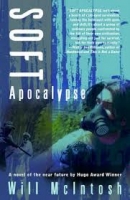
Soft Apocalypse book coverAs atmospheric carbon rises towards 450 units per million and the pitch of climatologists reach higher levels of alarm, Soft Apocalypse offers a worst-case scenario of what a slow collapse of society might look like from the inside. Where McIntosh's Bridesicle/Love Minus 80 revolved around a misuse of life-saving technology, Soft Apocalypse is an avalanche of Hell unleashed on our planet. It is futurehorror without a Freddy or Michael, where the bad guys numbered in billions around the globe. Many of them bad guys who live among us today, but who haven't been forced to show their true natures as long as the distractions of civilization keep them in check.

This story could easily be the world outside as everything unraveled in Cormac McCarthy's The Road. Watching the slow collapse of society through Jasper's narrative, we see humanity returning to its fierce roots as the veneer of civilization is slowly stripped away. Soft Apocalypse is a message you live through as you read it.

Who owns the moon?

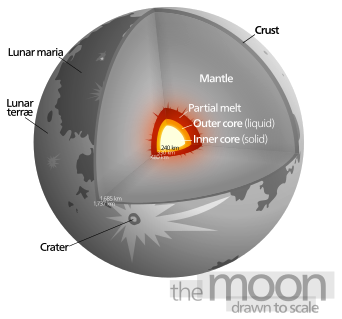
Interior view of the moonWhile there has only been a single trip to the moon involving humans, some groups view our only natural satellite as a hunk of resources waiting to be mined. In her article "Who owns the moon?" Dr Saskia Vermeylen provides an overview of the current laws and agreements governing moon property rights and how they might be handled based on current laws and treaties.

It's important to note there is another preceding treaty currently signed and ratified by a majority of nations. The 1967 "Treaty on Principles Governing the Activities of States in the Exploration and Use of Outer Space, including the Moon and Other Celestial Bodies" was designed to exclude using the moon as a base for weapons and also to limit national appropriation of moon property.

It may not be long until a new treaty needs to be discussed. Though current propulsion systems are not capable of bringing sufficient minerals back from the moon (or asteroids) to make the trip profitable, with current efforts focused on space tourism and transport, the need for more efficient methods to break free of Earth's gravity has never been more valuable. With intelligence and money being thrown at the problem, we should expect more efficient engines or alternatives within the next decade. There are many theories being researched that include space elevators, skyhooks, rail guns, and (safely) blasting it out of the atmosphere with lasers.

What will future jobs look like?

Andrew McAfee, one of the authors of The Second Machine Age, gives a presentation on the future of jobs as one of his TED talks. He provides a nice overview of the benefits and challenges of "the new machine age" and, on the human side, who will be impacted. At 15 minutes long, it's a fairly complete overview on the topic and how our societies might adapt to prepare our children and the adult unemployed for this change.

Do We Need Humans?

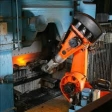
Robot workerThere is a lot of speculation on the technological singularity - the point at which artificial intelligence has progressed beyond human intelligence. Between AI and advanced engineering, humans could quickly become extraneous to modern society, especially from the viewpoint of those who own the robots and see extra humans as needful beings who return little to the planet.

That's a very dystopian view, but a possible outcome all the same. The February 28, 2014 episode of NPR's Ted Radio Hour offers four viewpoints on the future of humanity.

River of Gods


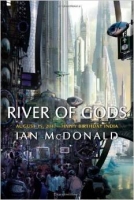
River of Gods coverIt's 2047, a hundred years after India gained independence from Britain, River of Gods is set in a country now broken into smaller nations. There hasn't been a monsoon season in years, resulting in a parched region with a Ganges trickling through Varanasi after being dammed upstream - a dam that has two nations on the edge of war.

The world is a different place in 2047. Genetic modification is everywhere, including superchildren and gender neutralizing body modifications. Artificial intelligence operates at different levels, some of them above the limits banned by international treaty. Otherwise, much of India is still poor, water is even more scarce, and the caste system carries on with only a few adjustments.

However, the Americans have found something deep in space. An object that causes a lot of questions and sends a specialist in search of her former lover. In India, someone else finds him first, someone with a strange past and who might not be completely human. Meanwhile, Mr. Nandha, one of the Krishna Cops, is hunting aeai's (artificial intelligence) with his team.

A winner of the British Science Fiction Association award and a nominee for both the Arthur C. Clarke Award and Hugo Award, River of Gods is a wild ride through a futuristic Indian culture. The complexity of the story, presenting normal human lives and emotions intertwined with decades of advancements, presents a believable backdrop against which events unfold.
Pages