Synthetic life (biocreation)

An Hour with Will McIntosh

http://www.amazon.com/gp/product/159780276X/ref=as_li_tl?ie=UTF8&camp=1789&creative=390957&creativeASIN=159780276X&linkCode=as2&tag=regardtomor07-20&linkId=HTYCIYXBI2SHEYDAIf you aren't familiar with Will McIntosh, he isn't surprised.  Like many authors, Will is happy just to have a writing career and thankful for the opportunities his readers provide, even if his name isn't well known. But given the quality of his previous work and a new young adult science fiction series in development (The first novel, Burning Midnight, is scheduled for 2016), don't be surprised if you start hearing his name more often.

But you should know his short story "Bridesicle" won the Hugo Award for Best Short Story and also the Asimov's Reader Poll in 2010. It was also a finalist for the Nebula Award for Best Short Story that same year. His short version of "Soft Apocalypse" was a finalist in 2005 for both the British Science Fiction and British Fantasy Awards.

Soft Apocalypse

Soft Apocalypse book coverAs atmospheric carbon rises towards 450 units per million and the pitch of climatologists reach higher levels of alarm, Soft Apocalypse offers a worst-case scenario of what a slow collapse of society might look like from the inside. Where McIntosh's Bridesicle/Love Minus 80 revolved around a misuse of life-saving technology, Soft Apocalypse is an avalanche of Hell unleashed on our planet. It is futurehorror without a Freddy or Michael, where the bad guys numbered in billions around the globe. Many of them bad guys who live among us today, but who haven't been forced to show their true natures as long as the distractions of civilization keep them in check.

This story could easily be the world outside as everything unraveled in Cormac McCarthy's The Road. Watching the slow collapse of society through Jasper's narrative, we see humanity returning to its fierce roots as the veneer of civilization is slowly stripped away. Soft Apocalypse is a message you live through as you read it.

CryptoDNA

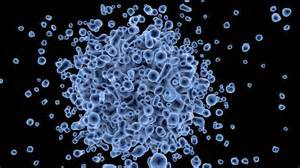
Microscopic view of a virusHis alarm sounded, followed by three pings to let him know that many messages were waiting. Jack rolled over, grabbing his phone off the stand and heading for the toilet. Blinking, he palmed his right eye. It was hazy, like a filmy shower door.

Taking a seat, Jack's stomach rumbled and a tension headache was working up his neck. The flu? he wondered, but a quick review of his phone's health sensors didn't show anything of concern. They weren't infallible, but they'd catch any substantial temperature increase.

Jack thumbed up the first message and squinted. Rsrv @ Ice House 8:30. Dinner with his brother, Earl. He flipped it to his calendar and pulled up the next as his stomach made a fuss. Package printed, ready for shipping. Track via Y8DK848785984. He tapped the code and it shot offscreen to his tracking software. His stomach emptied so hard he shivered.

Gamma

Factory Fifteen makes visually stunning short films and 'Gamma' is no exception. The story is set after nuclear wars have left some cities irradiated husks. Gamma is a product designed to clean the cities and make them habitable again. An artificial lifeform made from fungi and molluscs, the Gamma spores are seeded via floating ships and promise to make the cities safe within months. Sadly, this doesn't happen and we hear the narrator tell the tale of his home's fate.

Six and a half minutes long, 'Gamma' is worth a quick watch. It touches on issues surrounding modified life and what happens when they don't live up to the hype.

Blade Runner (1982)

Considered one of cinema's most influential science fiction films, the Blade Runner screenplay was based on Philip K. Dick's novel Do Androids Dream of Electric Sheep? and directed by Ridley Scott, who also directed sci fi classics Alien and Prometheus. Blade Runner is set in our near future, 2019 is only 5 years away, against a dystopian backdrop of a filthy, crowded, culturally mixed cityscape on a planet where most humans appear to have left for other colonies. As with most classics that visualized technological and ecological hell on the other side of the year 2000, the vision is not accurate. Yet, it navigates issues we are discussing today because they will be here tomorrow.

The Island (2005)

The Island dvd coverClones are big business in the future. Buy your own to supply the parts you require when sickness or injury threaten your life. The Island is a sci-fi action adventure set in the not-too-distant future, told from the viewpoint of two clones as they discover the truth of their existence and work to uncover corporate inhumanity.

Lincoln Six Echo and Jordan Two Delta are clones living in a safe, controlled world among others of their kind. History tells the outside world is too contaminated for life outside the compound, with only one remaining island clean enough to support human life. The clones live their routine hoping to one day win the lottery and move to the island, where they can live out their lives under the sun. But it's all a lie fabricated to keep them controlled and hopeful, two things necessary for the products, their bodies, to remain healthy.

Splice (2009)

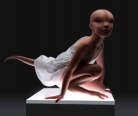
View of the spliced creatureAs genetic engineering progresses, humanity will be faced with issues of morality time and time again. Splice looks at the field of artificial life and the specific issue of combining human and non-human DNA. In the film, two researchers, facing the loss of their research, decide to combine human and animal DNA to create a new life form - just to prove it can be done. Once the birth occurs, each has a different response to the creature and those responses change over time as Dren develops towards adulthood.

The plot focuses on the different relationships Clive and Elsa have to the being they have birthed for science. Fearing their employer's response, they hide Dren and eventually mover her off site to protect her. Dren's development affects both scientists in different ways, with each responding to Dren and each other in different and sometimes horrific ways.
 

Using genetic modification to protect ourselves from dangerous species

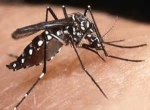
Aedes aegypti mosquitoOur ancestors consistently looked for ways to eradicate apex predators who were a danger to their tribes by directly hunting humans and also by competing for our food sources. Today, many species of apex predators exist in controlled numbers in places we enjoy them, but rarely come into direct contact with them. To make our world safer, we've done almost too good a job as various species move closer to extinction with every successful poaching.

Pages