Flora and Fauna (living nature)

Where will technology and big data take our future?

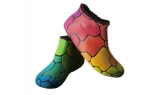
Stratasys 3d printed shoes

Technology is slowly infiltrating every area of our human existence. I read Alistair Croll's Race Alongside the Machine today on re/code and it led me to a reflection on how we humans are being changed by the technology we develop and where this might lead in the future.

When I came up with the original idea for a future-focused site, I immediately created a short list I called "aspects of human existence." I've changed them to "elements of how we live" and use them as story tags, a taxonomy vocabulary in Drupal terms, in order to help users find content. After reading Croll's piece, I decided today's exercise would be to look at the (now much longer) list and see what I can come up with for where current trends and predictions will take us as we continue to combine humans, technology and big data.

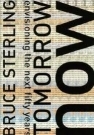
Tomorrow Now: Envisioning the Next 50 Years

Tomorrow Now book coverBruce Sterling has written three non-fiction books. This is his second and was published in 2003. It's a multilayered work, with seven stages (chapters) based on William Shakespeare's As You Like It, in which Jaques's monologue outlines the seven ages of man as infant, schoolboy, lover, soldier, justice, and at the end of life. Through each stage, Sterling looks at current (at the time) research and runs it out 50 years, to the middle of our century, attempting to paint a picture of how our lives will change.
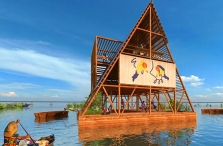
Ideas for dealing with rising ocean levels

Floating school plan for NigeriaUsually, lists of interesting pictures do little more than stoke the imagination. That's great, but it's so much better when you can see some interesting ideas that could actually solve real issues. An article on Discovery.com provides a dozen ideas for dealing with rising ocean levels and also creating energy (I assume because land-based energy sources will use too much important above-water property).


Vincent Fournier's Post Natural History

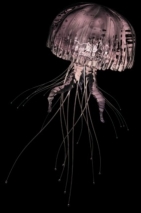
Jellyfish

Wired offers an overview of photographer Vincent Fournier's Post Natural History artwork, in which he speeds up the evolution of living organisms to incorporate technological capabilities.

These creatures come from the future—an imagined future, based loosely on current research on synthetic biology and genetic engineering. The idea is that these are living species, reprogrammed by mankind to better fit our environment as well as to adapt to new human desires.

Lantessa's Release

“Just because the contract allowed you to wriggle between my thighs does not make us friends or require I spend time with you and yours.” Lantessa knew her voice was louder than the norm, but she was frustrated. Pregnant and frustrated and tired and wanted her ‘husband’ to go away and leave her to her day.

She wouldn’t look at him, but the darkened skin of the dome clearly reflected his stance and mood. Regigul looked away, feigning reflection or composure or possibly, though she didn’t think it possible, an inner dialogue.

“Tessie, as your husband…”

Lantessa's Release

  • No explicit material

Type: 

  • Story (2500+ words)

Average rating: 

0

“Just because the contract allowed you to wriggle between my thighs does not make us friends or require I spend time with you and yours.” Lantessa knew her voice was louder than the norm, but she was frustrated. Pregnant and frustrated and tired and wanted her ‘husband’ to go away and leave her to her day.

She wouldn’t look at him, but the darkened skin of the dome clearly reflected his stance and mood. Regigul looked away, feigning reflection or composure or possibly, though she didn’t think it possible, an inner dialogue.

“Tessie, as your husband…”

Story tags (elements of how we live): 

Location of story: 

Years into the future: 

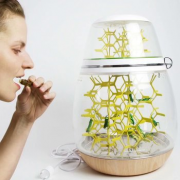
Lepsis: edible grasshopper terrarium

Lepsis product shot

The UN thinks we should be eating more bugs.  (And my mother was freaked out by sushi the first few times she saw it).  There are many places in the world where insects are on the menu and supposedly a few species that are excellent dining.  Some people are serious enough about it, there are even some nice recipe sites hosted by the likes of Iowa State's Entomology Club and Arizona State University - Mmmm, bug bars.

Pages