Original content

Dan Abelow: The journey to our full potential

House comparisonFuturists often explain our potential consumption in the number of planets we would need if everyone lives like a Westerner with large homes, multiple cars, and a dependency on consumerism to drive the economy - the last count I read was six Earths. It's a fair assumption and a questionable habit. In fact, I believe teaching my daughter to control her consumerism will be a key asset in her future no matter where or how she lives.

As part of an ongoing series to introduce his new book, Dan Abelow introduces chapter 1.2 about the Age of Crisis, which he refers to as The Crisis of Success. He sums the crisis up very well in a single sentence:

Our growing Crisis of Success comes from who we are: Everyone wants it all, wants it now, and won’t stop.

A stronger, sexier, younger body

Robot stripper on screenI've been watching this video make the rounds for about two weeks. My first thought upon seeing it was, "How long before Madonna is on the phone with Kurzweil and Kaku to figure out when she can dump her brain into it and plan a new world tour?" Humorous, but hardly kind. Though I'm no fan of Madonna and believe she is narcissistic to the extreme, I also have to admit most of humanity is the same way. If we could push our minds into machines like these, how many of us would and how often?

Ventus

Ventus book coverVentus is one of those scifi novels that strikes a great balance between plot, characters and new technologies - and a few old ones. One of my favorites and it's free on his website (or you can donate something for a novel that offers both education and entertainment with 4 stars on Amazon and 4.6 on Manybooks) if you're looking for something to occupy your weekend until winter finally sails away.

Tracking behavior: corporate control or assigning responsibility where it belongs?

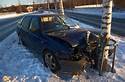
Car hit treeAs greater details of our lives can be tracked, data analysis can show trends in our behavior against the norm. When I view personal privacy, I ask three things:

  1. Why does someone need to know my preferences and tendencies?
  2. Can this data positively impact myself or my family?
  3. Can this data negatively impact myself or my family?

A future of augmented reality for tourism and education

Augmented reality with virtual bear on a handI love history, though I struggle to internalize it without context. I find it challenging to put all those dates and names and places together without a narrative or visual aid. Travelling Europe has helped, especially when I read topical history books before and during the trip, aware of past events and visiting the sites where they occurred. Not everyone can afford the expenses or time to travel, but advancements such as augmented reality may be ready to offer some help.

Augmented reality overlays computer generated images over realtime visuals. The field was limited for mobile use until smartphones with cameras were able to provide a realtime view for a graphical overlay. Phone screens are nice, but limited. Several technologies are coming together to provide data overlays to provide rich environments, including wearable glasses (Google Glass), interactive street views (Google Stretview), and metadata tying content to a space based on both GPS coordinates and date identification. Not the current date, but the time frame the media represents.


A Woman Sold for Her Brains and Body

"And this, Mr. Trupp, is our greatest gem."

The attendant led the woman...no, girl this time...by the hand as she had the others. Warren wondered if this 'demo mode' hurt them or if they were even aware of the time passing.

As with the others, the attendant brought her into the room, told her to twirl and sat her on the sofa opposite him. Mr. Lomen reached up to caress her cheek with two fingers. The girl did not flinch or even seem to notice his presence.

New technologies allow us to track everything: should your employer?

Screen capture from the film Modern TimesA short article from Popular Science reports how companies are using new technologies to track employee work habits and lifestyles in order to mold a better employee. Part of the age of new life tracking termed the 'quantified self', they reference three articles on the subject. Here is a list of what is being tracked:

    Sleep
    Distance walked or run
    Diet
    Time spent sitting at their desk
    "Happiness"
    "Performance data" on how well employees communicate with each other and shoppers
    "Tone of voice, movement and even posture when communicating with others"

Can DNA be linked to future crime?

Leatherface with a chainsawIn December 2013 an assault on Sandy Hook Elementary ended with the sad deaths of twenty children and six teachers, after the killer took the life of his own mother and before taking his own. Andrew Solomon gives us a look at the killer's father (I refuse to print his name - infamy should not be gifted on a killer) and the fall out in his life a little over a year after the shootings.

Suicide in an aging world: could it become an industry?

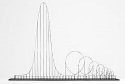
Suicide roller coasterThe Euthanasia Coaster is a roller coaster concept by designer Julijonas Urbonas. The coaster is designed to generate a steady 10g of force on the riders for long enough to cause cerebral hypoxia. Could death by amusement ride be part of our future or is this just too sci-fi to consider?

According to the American Foundation for Suicide Prevention, there were 38,000 suicides reported in 2010. From these figures, the age of 85 and over has remained among the two highest categories since 2000 (and before if we notice this demographic was 20% of all suicides in 2000 - 6 points higher than the next demographic). Only since the most recent economic instability has the age 45-64 moved to the top. Before that, the numbers followed a trend from youngest to oldest with greater age equaling greater rates of suicide.

Pages