Original content

Can genetic testing identify Olympic level athletic potential?

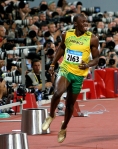
Usain Bolt The premise of the Olympics is to measure and reward the greatest human ability at various skills or sports. Modern pharmacology offers many substances identified as potentially beneficial to an athlete - meaning they give an unfair advantage to a competitor - the World Anti-Doping Agency provides a nine page handout identifying substances for which an athlete can be disqualified. With so much pressure on the athletes and so much money for sponsorships on the line, there are substantial reasons to cheat for those who are less sporting.

That doesn't mean there aren't other ways to help athletes reach or maintain their potential. In addition to regular training and hiring the best coaches, athletes also use the services of dieticians, massage therapists, sleep counselors, hydration specialists and gait analysis professionals in order to smooth every bump in their lifestyle, conditioning and performance. Some athletes even choose to sleep in a chamber that mimics high-altitude air quality to increase performance. And as modern research enables more experiments finding ways to benefit athletes that aren't cheating, by eliminating hurdles that keep athletes from reaching their peak performance, we'll hear of more bizarre - and questionable - methods athletes will use to enhance their skills.


Extremis - Iron Man becomes posthuman

ExtremisWarren Ellis introduced the Extremis concept to Iron man in a 6-issue story arc starting in January 2005. This arc changed Tony Stark from a cyborg to a posthuman by introducing nanotechnology into his body and altering his physiology to include direct connections with the Iron Man suit. Ellis introduced many concepts and characters that were used in the Iron Man movie trilogy, especially Iron Man 3.

If you're into superhero comics, this is a short arc you don't want to miss. It's available on Marvel Unlimited or through Amazon. In typical comic-book style, it takes some complex scientific breakthroughs and turn them into a magical elixir, yet it brings many of the reasons we research posthuman adaptation into perspective given Stark's need to deal with the story villains. And there are a few great conversations in which characters wax philosophical about their Frankensteinian need to create a future that might be more monster than they would like.

Tomorrow Now: Envisioning the Next 50 Years

Tomorrow Now book coverBruce Sterling has written three non-fiction books. This is his second and was published in 2003. It's a multilayered work, with seven stages (chapters) based on William Shakespeare's As You Like It, in which Jaques's monologue outlines the seven ages of man as infant, schoolboy, lover, soldier, justice, and at the end of life. Through each stage, Sterling looks at current (at the time) research and runs it out 50 years, to the middle of our century, attempting to paint a picture of how our lives will change.

The Future of the Mind: The Scientific Quest to Understand, Enhance, and Empower the Mind

Dr. Kaku provides of his new book and how our understanding of the human mind will enable some amazing feats in the near future - including the ability to record  thoughts in rats and be able to play them back into the rat's brain so the thought is relearned by the animal.

Can a flawed humanity create a future with a flawless government?

Karl MarxWars are fought over which flawed ideology works best and communism has turned out to be one of the most flawed, even if the original roots were designed to fix the flaws in the capitalist structures of 19th century Europe. Karl Marx's work developed into 1848's Communist Manifesto and later in Das Kapital in a response to conflict between the more wealthy ownership classes and the labour class that provides the man power for production. Marx viewed Capitalism as "the dictatorship of the bourgeoisie" and made many predictions on how this socioeconomic system would eventually fail due to the internal tension between these two classes. His work would later be used to overthrow nations in order to create failing economic states where the communist effort was misused to create more disproportionate social inequality than found in nearly any other form of representative government.

Tracking emergencies - who gets the data?

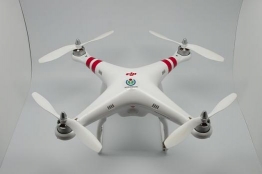
DJI Phantom DroneChemical sensors are capable of detecting and analyzing gases in order to alert us to airborn pollutants from industrial processes, smog, natural events such as volcanic eruption and even terrorist activities (hopefully before they occur). These devices can be arranged wherever we require an awareness of what the air is carrying. US embassies use air quality units to release air quality measurements, sometimes in real time - or not at all.

When there is a major event, awareness of risk conditions for first-responder units is key. This week, Popular Science covered a Connecticut fire department using a drone to identify risk conditions for fire fighters at a quarry. While there isn't much new in using remote controlled devices to minimize the risk to human lives - bomb squads and SWAT teams have used robots for some time to get a look at situations before sending in humans - the drone provided a very different look from the air.

Can we find another planet comparable to Earth?

EarthScience fiction commonly presents a universe full of Earth-like planets, each capable of sustaining human life with only a few changes to terraform into a near-perfect environment. Popular Science offers an article that explain the five characteristics required to match Earth and another that presents all of the known explanets in graphics helping understand how few match these characteristics.

The characteristics are:

  1. Earth size, with a rocky structure...
  2. Near a sunlike star, but not too close...
  3. With liquid water...
  4. Biosignatures...
  5. ...and intelligent life.

Can current cities be redesigned for a future of healthier citizens?

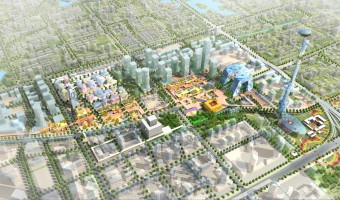
Isometric view of a cityCities are dense life centers offering a greater range of opportunities and services than those typically present in rural settings. While this offers a strong draw to people looking to take advantage of the wealth and income cities offer, organic growth of urban areas can decrease efficiency and home values when the settings become too complex and disorganized to remain inviting. Urban decay then leads to increases in crime and can be connected with shifts towards suburban settings, which in turn increase air pollution. It's a complex problem that has largely been met with middling results. Can new trends in urban planning help reclaim urban zones?

The World Health Organization forecasts that 60% of humans will live in a city by 2030 and the number will rise to 70% by 2050. Bigger, higher, denser - the characteristics of cities around the world involve a lot of words ending with '-er' - such as dirtier as air pollution increases along the population curve.

What are the long term social impacts of neuro-enhancing technologies?

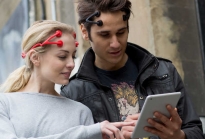
A couple wearing Foc.us devicesWired's Christian Jarrett covers a new technology designed to "overclock your brain." It's a great article in which he thoroughly covers the spectrum of what benefits the Foc.us offers, a bit of history, and some of the warnings we should be aware of.

For this article, let's pretend it is possible to use electrical current to stimulate our brains, making the user "smarter." What are the social impacts? Let's look at a few.

Owning a mobile phone makes you intimately trackable

Dear subscriber, you are registered as a participant in a mass disturbance.

This was the content of a text message received by cell phone carrying protestors in Kiev by the Ukranian government. Using mobile technologies, the government was able to identify all of the phones in certain areas and target them with this warning. It's a message that lets the carrier of the phone know they, or the phone owner, has been identified by private records as participating in the protests - or at least being in the vicinity.

Pages